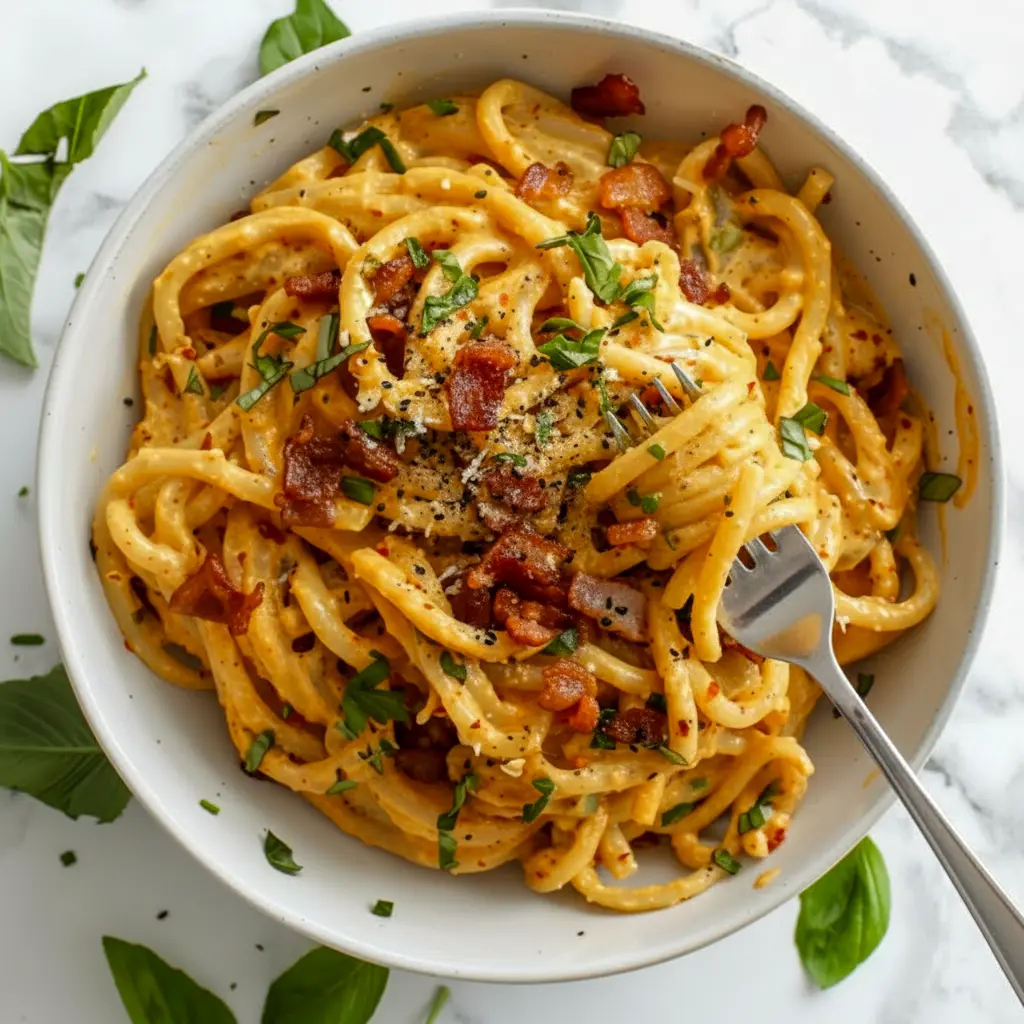
Carbonara Recipe fans, meet Kimchi Carbonara — a creamy, spicy noodle mashup that somehow feels both comfortingly familiar and wildly adventurous. This dish takes that lush egg-and-cheese sauce you love, throws in crunchy bacon, and brightens everything up with tangy, fermented kimchi. Ready for a dinner that’s equal parts cozy and exciting?
Brief introduction to the recipe
Kimchi Carbonara blends the silky, eggy sauce of classic carbonara with the punchy heat and acidity of kimchi. You get the lush mouthfeel of a proper carbonara, plus that fermented zip that wakes up every bite. It’s simple, fast, and perfect for weeknights when you want something more interesting than “plain pasta with sauce.” Also? It’s a brilliant way to explore Fusion Food without a safety net.
Why you’ll love this recipe
Why does this work so well? Because it balances three things: texture, richness, and brightness. The bacon gives crunch and smoke, the egg-cheese emulsion delivers unctuous silk, and the kimchi adds acidity and heat. Want depth but not fuss? Boom — this is your answer. It’s a great addition to collections of Asian Noodle Recipes and an unexpected twist for folks who adore classic Italian Carbonara Recipe builds.
The story behind the dish
Have you ever stared into your fridge and thought, “What if…?” That’s where fusion starts. Someone somewhere tossed kimchi into a carbonara pan and discovered magic. I experimented, trimmed what didn’t work, doubled down on what did, and ended up with a recipe that honors both traditions: the Italian technique of emulsifying eggs and cheese, and the transformative, bold Korean staple — Kimchi Recipe elements that bring the whole thing alive.
Ingredients breakdown — what each item brings to the party
- Spaghetti (8 oz): Classic texture for coating with sauce. Use a sturdy noodle that holds the emulsion.
- Kimchi (½ cup, chopped): Delivers tang, fermented complexity, and heat. This is the soul of the twist.
- Bacon (4 slices, chopped): Crisps up and provides smoky fat that flavors the whole dish. Pancetta works too if you want an Italian lean.
- Eggs (2): Create the silky sauce when mixed with cheese off the heat. Do not scramble them in the pan — you want a velvety coating.
- Parmesan (½ cup, grated): Adds salt, umami, and body to the sauce. Pecorino Romano also sings here.
- Salt & pepper: Basics, but taste as you go — kimchi can be salty.
- Scallions (¼ cup, chopped): Fresh bite and color on top.

Step-by-step “How to Make It”
- Boil the pasta
Cook spaghetti in salted water until just shy of al dente (check the package). Save about a cup of pasta water before you drain. That starchy water is sauce gold. - Crisp the bacon
In a large skillet, fry chopped bacon until brown and crisp. Use medium heat so the fat renders slowly and the pieces become luscious. Remove bacon with a slotted spoon, leaving the fat in the pan. Bold tip: Don’t throw away that bacon fat — it flavors everything. - Sauté the kimchi
Add chopped kimchi to the skillet with the rendered bacon fat. Cook for 2–3 minutes until the edges caramelize a bit and the kimchi mellows. That brief sauté tames raw sharpness and makes it more harmonious with the creamy sauce. - Whisk eggs and cheese
In a bowl, vigorously whisk the eggs with grated Parmesan until smooth. This is your sauce base; it will thicken with the pasta’s heat, not by direct high flame. - Combine spaghetti, kimchi, and bacon
Toss the drained spaghetti into the skillet off the heat. Add the crispy bacon back in. Remove from the burner to avoid scrambling the eggs in the next step. - Make the sauce
Pour the egg-parmesan mix over the pasta and toss quickly and continuously. Add a splash of reserved pasta water to loosen and create a glossy emulsion. Keep mixing until every strand looks silky. - Finish and garnish
Season with pepper (be generous — pepper is classic in carbonara) and fewer pinch of salt if needed. Scatter chopped scallions over the top and serve right away.
Pro tips for perfect results
- Work off the heat when you add the egg mixture — you want creamy sauce, not scrambled egg bits.
- Save pasta water. A few tablespoons help you coax the eggs into a silky emulsion.
- Control kimchi saltiness: Taste your kimchi first. If it’s super salty, skip extra salt until the end.
- Use high-quality Parmesan — freshness matters. Pre-grated powders won’t emulsify as nicely.
- Cook the bacon slowly for better texture — fast, high heat burns the edges and leaves the inside chewy.
Bold tip: If eggs thicken too fast, add more hot pasta water and whisk rapidly to revive the sauce.
Variations to try
- Vegetarian swap: Replace bacon with smoked mushrooms or roasted eggplant for smoky umami while keeping the creamy base. Great for Asian Dishes enthusiasts who go meatless.
- Spicy boost: Stir in a spoon of kimchi juice or top with gochujang drizzle for a deeper heat.
- Seafood twist: Toss in shrimp cooked briefly in garlic; it adds a lovely sweet brine that plays well with kimchi.
- Cheese play: Combine Pecorino and Parmesan for a saltier, tangier profile.
- Noodle switch: Use udon or wheat noodles for a more overt Asian Noodle Recipes vibe. Thick udon gives a chewy, slurpable texture.
- Herb finish: Garnish with cilantro or shiso for a fresh, herbal pop.

Why this fusion works (culinary logic)
At first glance, Italy and Korea seem far apart. But both cuisines love bold contrast: fat and acid, smoke and cream. Carbonara’s egg-and-cheese emulsion gives weight; kimchi cuts through with acidity and umami. Bacon bridges them with smoke. The result tastes cultured and familiar at once — a true Fusion Food success.
Best ways to serve
Serve Kimchi Carbonara hot and fast. Keep garnishes simple: scallions for brightness, extra Parmesan for those who want it cheesier, and maybe toasted sesame seeds for a nutty finish. Pair with a crisp salad to balance the richness. Hosting pals? Plate family-style and let everyone add the final pepper or cheese — interactive dinners = memorable dinners.
Quick tips for storage and leftovers
Carbonara does not love long storage. The egg-based sauce changes texture once chilled. But you can keep leftovers for up to 24 hours in the fridge. Reheat gently in a skillet with a splash of water or milk to loosen the sauce. For best results, cook slightly less than you need and plan a fresh batch if you expect leftovers.
Bold tip: If you must prepare ahead, keep pasta and sauce components separate — reheat and toss together just before serving.
FAQs — short answers to the most likely questions
Will the eggs scramble?
They will if you add them over high heat. Always mix off the heat and use reserved pasta water to create a glossy sauce.
Can I use store-bought kimchi?
Yes. Taste it first — some kimchis pack more salt or heat than others. Adjust seasoning accordingly.
Is this authentic carbonara?
This isn’t traditional Italian carbonara; it’s a playful riff that keeps carbonara technique at the core. Think of it as respectful experimentation — part Carbonara Recipe DNA, part Korean Food spark.
Can I swap spaghetti for rice noodles?
Sure, but rice noodles won’t hold the emulsion the same way. If you try it, treat it more like a saucy stir-fry.
Pairings and what to drink
Pair this dish with a bright, acidic white wine (think Sauvignon Blanc) or a crisp lager to cut through the richness. For nonalcoholic options, sparkling water with lemon or a cold barley tea (bori-cha) complements the kimchi flavor nicely — a little nod to Asian Cuisine.
Serving ideas for gatherings
Make this a live-cook station: boil the pasta, fry the bacon and kimchi, whisk the egg-cheese, then let guests watch you toss it together. It’s dramatic but simple — perfect for weeknight crowds who want something special without a fuss. Because this sits comfortably among International Recipes, it impresses guests who love global mash-ups.
Common mistakes and how to avoid them
- Adding eggs on high heat — leads to curdled sauce. Mix off the heat.
- Over-salting — kimchi and cheese add sodium. Taste-first.
- Skipping pasta water — you’ll miss the silky glue that binds sauce to noodle.
Small tweaks that lift it
- Finish with a tiny drizzle of sesame oil for an aromatic lift.
- Toss in a small pat of butter at the end for extra gloss and richness.
- Add a squeeze of fresh lemon if the dish feels heavy — acid brightens everything.
Final thoughts — wrap-up
Kimchi Carbonara proves that two great things can become greater together. It keeps the Carbonara Recipe method intact while drawing zest and umami from Kimchi Recipe traditions. The result feels global — a plate that nods to Asian Cooking, to Italian technique, and to curious cooks everywhere. It’s a delicious example of Asian Dishes meeting Western comfort food in a playful, tasty way.
So — hungry? Grab the pasta water, warm the skillet, and make this quick, bold, and utterly satisfying meal tonight. IMO, this one’s a keeper.
Follow me on Pinterest for daily new recipes.
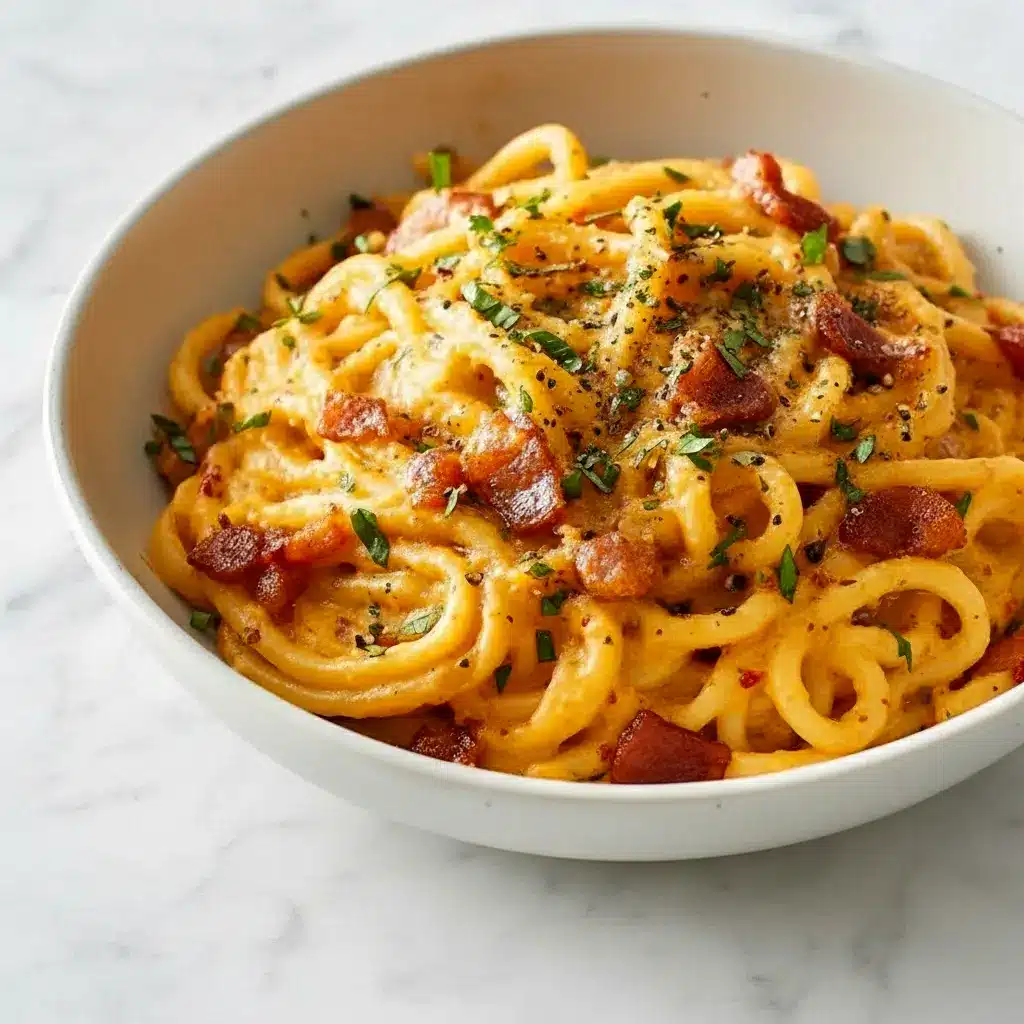
Ultimate Kimchi Carbonara Recipe — Smoky, Spicy, Silky
- Prep Time: 10 minutes
- Cook Time: 15 minutes
- Total Time: 25 minutes
- Yield: 2 servings 1x
- Category: Dinner
Description
A creamy carbonara gets a zesty Korean twist: tangy kimchi and crisp bacon meet an egg-and-cheese sauce for a quick, comforting noodle supper.
Ingredients
- 8 oz (225 g) spaghetti
- 1/2 cup kimchi, roughly chopped
- 4 slices bacon, cut into small pieces
- 2 large eggs
- 1/2 cup freshly grated Parmesan (or Pecorino)
- Salt and freshly ground black pepper, to taste
- 1/4 cup scallions, thinly sliced (for garnish)
Instructions
- Boil the pasta. Cook the spaghetti in generously salted water until just shy of al dente according to the package. Reserve about 3/4 cup of the starchy cooking water, then drain the pasta.
- Crisp the bacon. In a wide skillet over medium heat, fry the chopped bacon until it turns golden and crunchy. Use a slotted spoon to transfer the bacon to a plate, leaving the rendered fat in the pan.
- Warm the kimchi. Add the chopped kimchi to the skillet with the bacon fat and sauté for 2–3 minutes until it softens and sweetens slightly.
- Whisk the sauce. In a mixing bowl, beat together the eggs and the grated cheese until smooth and combined.
- Combine pasta and toppings. Add the drained spaghetti to the skillet with the kimchi, toss to coat, then return the bacon to the pan. Remove the skillet from the heat.
- Create the carbonara sauce. Pour the egg-and-cheese mixture over the hot pasta, tossing briskly so the residual heat thickens the mixture into a silky sauce. Add a splash of the reserved pasta water as needed to loosen and emulsify.
- Season and finish. Taste and adjust with salt and plenty of freshly ground black pepper. Scatter the sliced scallions over the top and serve immediately.
Notes
Quick tip: Work off the heat when you add the egg mixture to avoid turning the sauce into scrambled eggs.