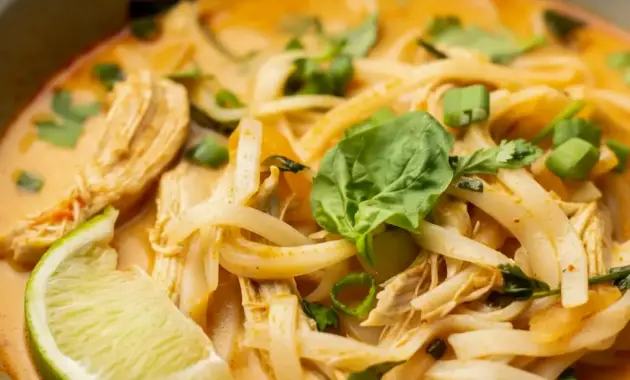
Why Thai Chicken Curry Soup belongs in your weeknight lineup
If you want something cozy, fragrant, and effortless, Thai Chicken Curry Soup is your go-to. This bowl marries warm coconut, bright lime, fragrant ginger, and savory chicken into a one-pot meal that tastes like you spent way more time on it than you actually did. Want a fast dinner that still delivers punch? Say no more.
Brief intro — what this soup is and why it works
This Easy Thai Chicken Curry Soup takes pantry-friendly ingredients and turns them into layered, restaurant-style flavors. You get saffron-like warmth from the coconut and curry paste, zing from fresh lime and ginger, and fresh-herb brightness at the finish. Use leftover rotisserie chicken or quickly poach breasts — either way, you’ll have dinner on the table in under 30 minutes.
Why is this better than a plain chicken noodle? Because it’s bold without being fussy. Curious? You should be.
Why you’ll love this Thai Chicken Curry Soup
- Fast & forgiving — it’s a speedy one-pot meal that tolerates substitutions.
- Bright, balanced flavor — acid, heat, fat, and herbs all play together.
- Low-effort protein — leftover or rotisserie chicken keeps prep minimal.
- Comfort that’s light — if you want cozy but not heavy, this is your bowl.
Want to make it spicier? Swap to a hotter red curry paste. Want gentler heat? Choose a milder paste or use less. Flexibility is a core strength here.
The Key Ingredients (and Why You Need Them)
Below I list the main ingredients (no amounts here — the recipe card has those). I’ll explain what role each plays so you understand how and why to tweak things.
- Red curry paste — the flavor engine. It brings chili, lemongrass, galangal/ginger, and aromatics in one paste. Taste yours first; brands vary in heat.
- Fresh ginger — adds a bright, peppery zing that cuts through the coconut richness. Grate frozen ginger if you keep it in the freezer — it’s an underused hack.
- Coconut milk — gives the soup its silky body and mellow sweetness. Use full-fat for richness or light if you want lower calories.
- Lime juice — acidity brightens everything. Add at the end so the brightness stays fresh.
- Chicken broth — the savory base that carries the curry flavors. Use low-sodium if you plan to add fish sauce or soy later.
- Rice noodles — slurpable and quick-cooking. Thicker rice noodles hold up better in hot broth without disintegrating.
- Rotisserie or leftover chicken — fast protein that shortens cook time dramatically.
- Fresh herbs (basil, cilantro) and scallions — final fresh notes that make the soup pop.
- Optional: fish sauce — just a few drops add umami depth. Use sparingly.
Pro tip: If you want a more pronounced ginger profile — try a spoonful of grated ginger in the curry base and a thin slice of ginger in the broth while it simmers, removing it before serving. Works wonders.
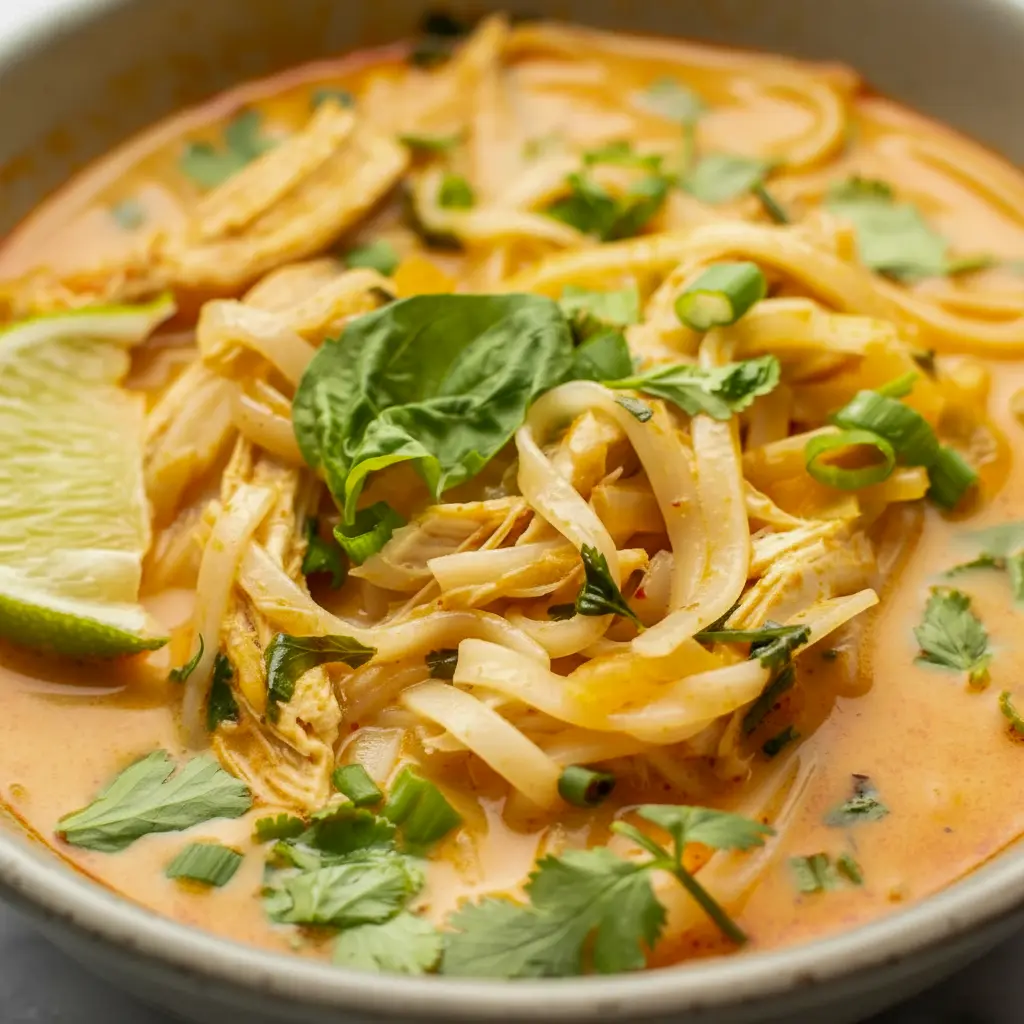
How to Make It — step-by-step for reliable results
This section gives a clear, linear method. Follow it for a fast, delicious bowl.
- Sauté aromatics. Heat oil in a heavy pot. Add chopped onion (or shallot) and cook until translucent. Stir in garlic and grated ginger until fragrant.
- Bloom the curry paste. Add the red curry paste and fry for 30–60 seconds. This step deepens the paste’s flavors and removes rawness.
- Add liquids. Pour in chicken broth (or water + bouillon) and coconut milk. Stir to combine. Bring to a gentle simmer.
- Noodles & chicken. Add rice noodles to the simmering broth and cook until just tender. Stir in shredded rotisserie chicken to warm through.
- Finish with lime & herbs. Remove pot from heat, then stir in lime juice, chopped cilantro, basil, and scallions. Season to taste with salt, pepper, or a splash of fish sauce.
- Serve hot. Ladle into bowls and pass extra lime wedges, herbs, and chili flakes.
Bold tip: Add the lime at the end — cooking bright citrus dulls that fresh pop we crave.
Pro tips for perfecting your Thai Chicken Curry Soup
- Use fresh ginger if possible. FYI, frozen ginger grated from the freezer works great and reduces waste.
- Taste as you go. Curry paste brands vary — start conservatively and ramp up.
- Pick sturdier rice noodles if you plan to store leftovers. They’ll hold texture better than thin vermicelli.
- Don’t overcook the herbs. Add basil and cilantro at the last minute for fresh aromatics.
- For extra depth, add a teaspoon of peanut butter or a splash of soy for body, or a few drops of fish sauce for umami. Little tweaks = big payoff.
- Want a richer broth? Brown your chicken bones or use a homemade stock. The soup scales easily.
Big tip: If you plan to meal prep, keep noodles separate and add them to bowls when reheating soup — this prevents them from soaking up all the broth.
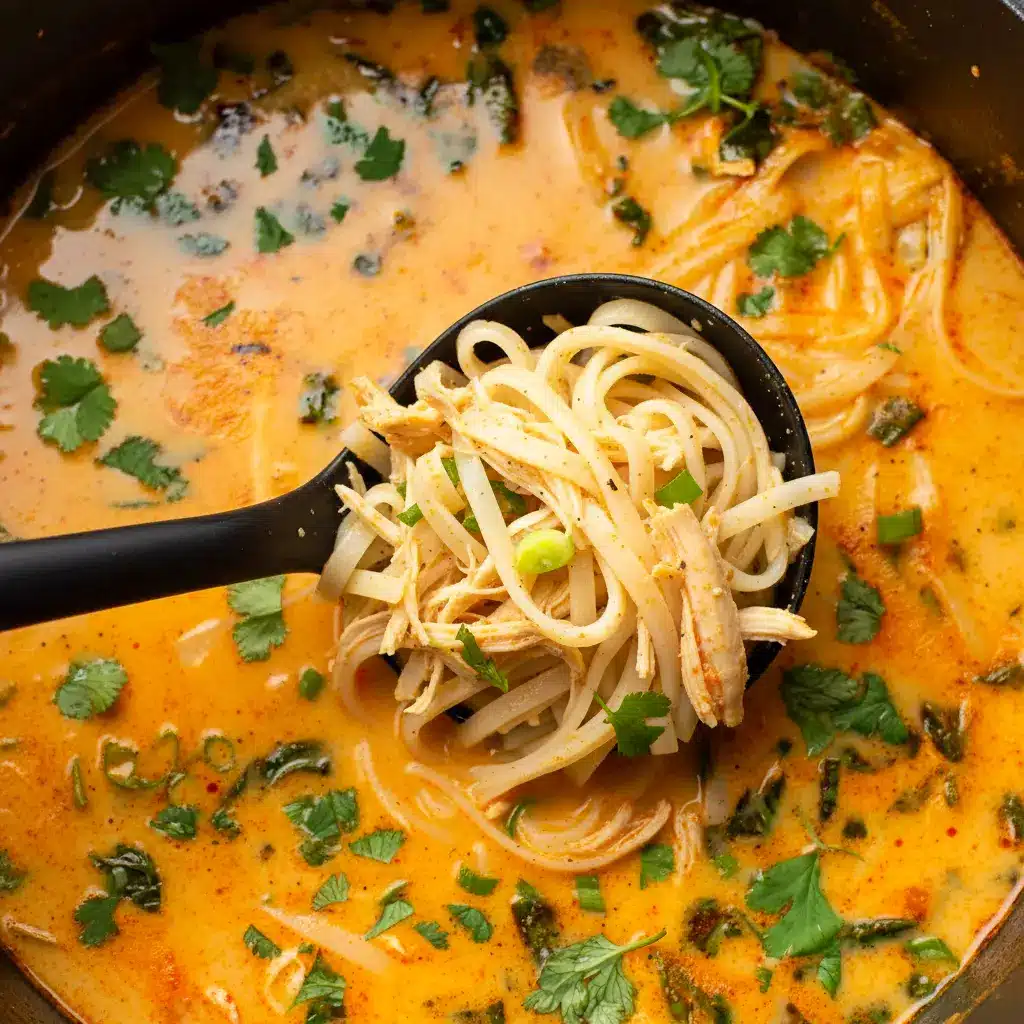
Variations to try — make it yours
- Thai Ginger Chicken Soup: Amp up ginger and add a touch more lime for a ginger-forward profile — bold and refreshing.
- Spicier version: Stir in chopped Thai chilis or use a spicy paste for a real kick.
- Noodle swap: Use udon for chewy texture or keep the bowl brothy-only for a low-carb option.
- Seafood twist: Replace chicken with shrimp or fish (add late so it doesn’t overcook).
- Creamier: Add an extra splash of coconut milk or a spoonful of cream for a lux finish.
Looking for creative riffs? Try adding roasted sweet potato for sweetness, or baby bok choy for crunch — both make it feel like a full meal.
What to serve with this Easy Thai Soup
This soup stands alone, but a few sides elevate the experience:
- Crusty bread — great for mopping up broth if you’re craving something Western.
- Bean sprouts and lime wedges — add at the table for texture and brightness.
- A simple Thai quinoa salad — for another healthy, fresh side that complements the soup.
Want to go lighter? Serve with steamed greens or a cucumber salad for a crisp contrast.
Quick storage and leftovers guide
- Fridge: Store in an airtight container for 3–4 days. Expect noodles to absorb broth; reheat gently with added water or stock to loosen.
- Freeze: You can freeze the broth and chicken (without noodles) for up to 3 months. Thaw and add fresh noodles when reheating.
- Reheat: Warm on the stove over low heat; add extra broth if the soup thickened. Microwave works, but stove heating preserves texture better.
Note: Noodles get soggy the longer they sit. For best leftovers, store noodles separately.
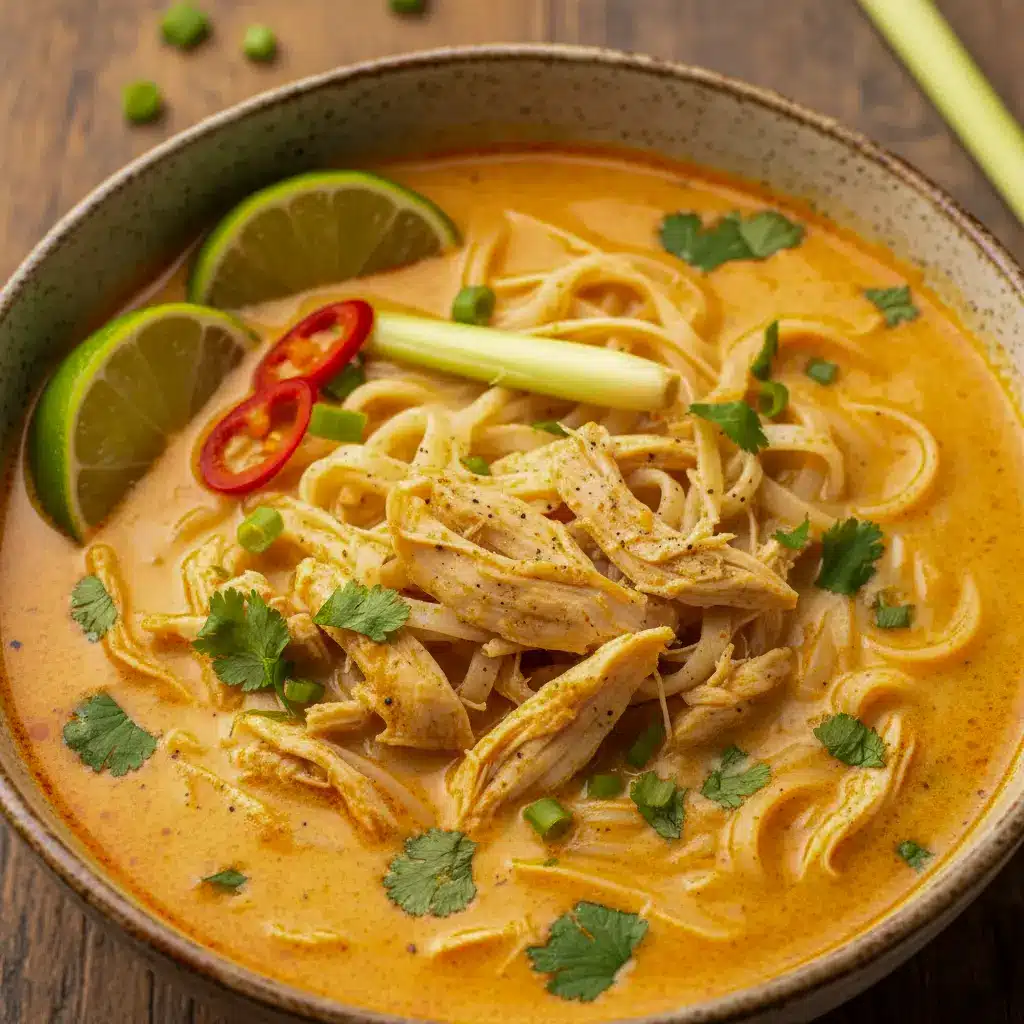
Common FAQs — quick answers, no fuss
Can I use pre-made rotisserie chicken?
Absolutely. It’s a shortcut I use often. Shred it and toss it in near the end so it warms without overcooking.
Is this the same as a classic Tom Kha?
Not exactly. Tom Kha uses galangal and often has a creamier, more lime-leaf-forward profile. This one is a curry-style soup with red curry paste — still Thai-inspired and equally cozy.
My curry paste is very spicy — what do I do?
Start with less and taste after it simmers. Add more if needed. You can always add heat later; you can’t remove it.
Can I make this vegetarian?
Swap vegetable broth and tofu or mushrooms for the chicken. Add a splash of soy or miso for umami.
Why this recipe shows up in so many Easy Thai Soup Dinner Ideas
This bowl hits a sweet spot: minimal hands-on time, dramatic flavor, and high flexibility. Whether you want a quick solo dinner or a crowd-pleasing pot for family night, it adapts. It sits comfortably among other Thai Soup Recipes Easy options while keeping its own identity — creamy, tangy, and herb-scented.
You might see odd variations online like Salt And Lavender Thai Chicken Curry Soup or Easy Thai Chicken Curry Soup Salt And Lavender — unique, sure, but not a classic combination. If you want to experiment with floral notes like lavender, add sparingly; it can easily overwhelm. For most cooks, sticking with ginger, lime, and fresh herbs yields reliably delicious results.
Final thoughts — cozy bowl, zero fuss
This Thai Chicken Curry Soup is proof that bold flavor doesn’t demand laborious steps. Use rotisserie chicken, keep a jar of good red curry paste on hand, and you’ll have a weeknight dinner that feels special. Whether you call it Ginger-spice Chicken Soup, Thai Curry Soup Recipes, or simply the best bowl that hits all the right notes, it’ll become a regular.
So, ready to simmer a pot? Grab that lime, grate fresh ginger, and let the kitchen smell like dinner. You’ll be glad you did.
Follow me on Pinterest for daily new recipes.
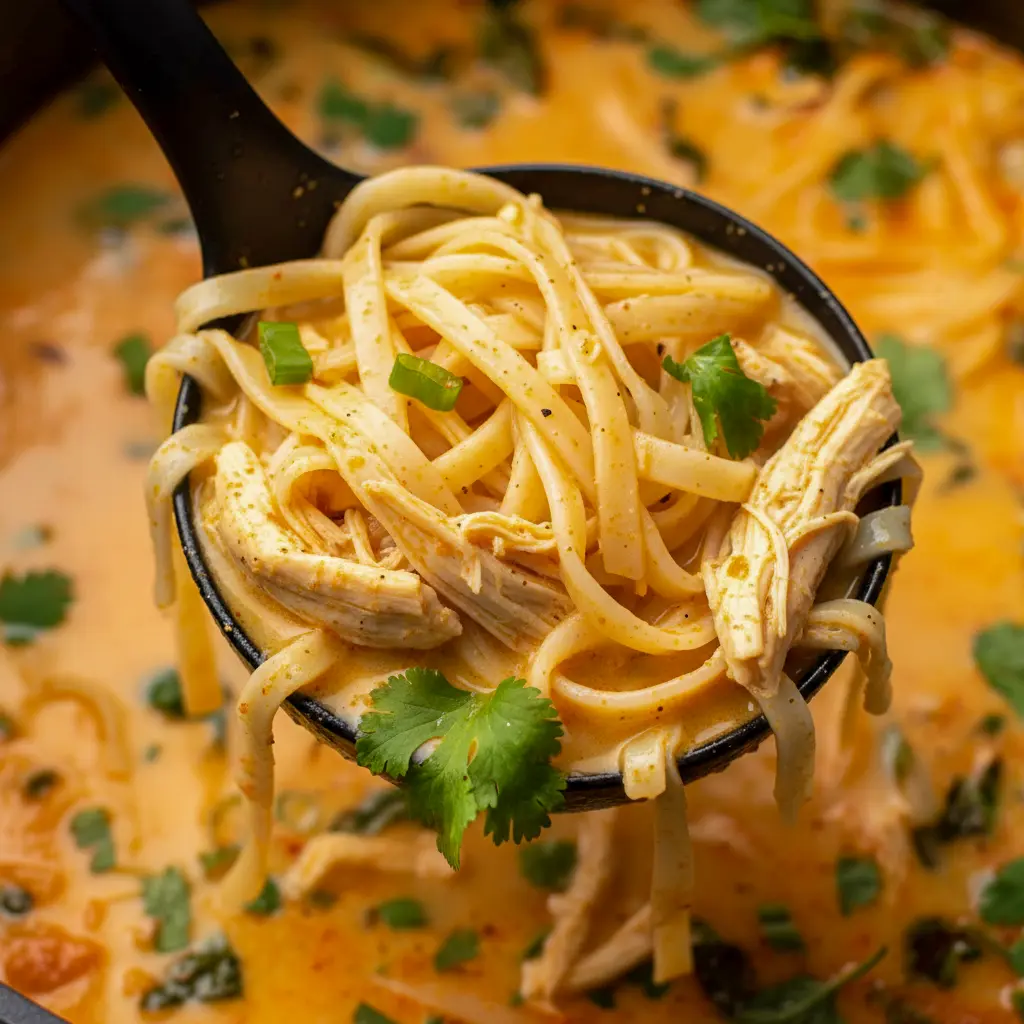

Easy Thai Chicken Curry Soup – Cozy One-Pot Dinner
- Prep Time: 5 minutes
- Cook Time: 15 minutes
- Total Time: 20 minutes
- Yield: 6 Servings 1x
- Category: Dinner
Description
Cozy, fragrant, and ready in minutes — this Easy Thai Chicken Curry Soup uses red curry paste, creamy coconut milk, fresh ginger, and rotisserie chicken for a one-pot dinner that’s bright, comforting, and incredibly quick to pull together.
Ingredients
- 1 tablespoon olive oil
- ½ medium onion, finely diced
- 1 teaspoon fresh ginger, grated
- 3 garlic cloves, minced
- 4 heaping tablespoons Thai red curry paste (adjust to taste)
- 4 cups chicken or vegetable broth
- 2 cups water
- Juice of 1 lime
- ~3.5 oz uncooked rice noodles (see note)
- 1 (13.5 oz) can full-fat coconut milk
- 2 cups cooked chicken, shredded (rotisserie works great)
- Large handful fresh basil, torn
- Handful fresh cilantro, chopped
- Sliced scallions, to taste
- Salt and freshly ground black pepper, to taste
- Lime wedges, for serving (optional)
Instructions
-
Warm the olive oil in a large pot over medium-high heat. Add the chopped onion and cook until it softens and becomes translucent, about 4–5 minutes.
-
Add the grated ginger and minced garlic, then stir in the red curry paste. Cook, stirring constantly, for about 30 seconds until the paste smells aromatic. This quick step blooms the spices.
-
Pour in the broth, water, and lime juice. Add the rice noodles and raise the heat to bring the pot to a gentle boil.
-
Once the noodles start to soften, stir in the coconut milk and the shredded chicken. Lower the heat to medium-low and let the soup simmer for about 10 minutes so the flavors meld and the noodles finish cooking.
-
Remove from heat and fold in the torn basil, chopped cilantro, and scallions. Season with salt and pepper, tasting and adjusting as needed.
-
Ladle into bowls and serve immediately with lime wedges. Note: the noodles will soak up broth over time—add extra stock when reheating leftovers.
Notes
- Notes & handy tips
- Prep while you cook — chop herbs during the simmer to save time.
- Rice noodle packages vary a lot. I prefer thicker rice noodles (around 3 mm) because they hold up better in the hot broth. Use part of a package if needed.
- Curry pastes differ by brand in both flavor and heat. Start with less if yours seems spicy, then add more after tasting.
- If you want this milder, reduce the paste or use a brand labeled “mild.” For more heat, stir in sliced Thai chiles or a dash of chili oil.
- For make-ahead lunches, store broth and solids separately from noodles to avoid mushy texture. Reheat soup and add fresh noodles when serving.
- Storage
- Refrigerate leftovers in an airtight container for 3–4 days. The noodles will absorb liquid—add extra broth when reheating.
- Freeze the soup (without noodles) up to 3 months; thaw, reheat, and add fresh noodles before serving.
Nutrition
- Calories: 304kcal
- Sugar: 1g
- Sodium: 660mg
- Fat: 20g
- Carbohydrates: 19g
- Fiber: 1g
- Protein: 15g
- Cholesterol: 38mg