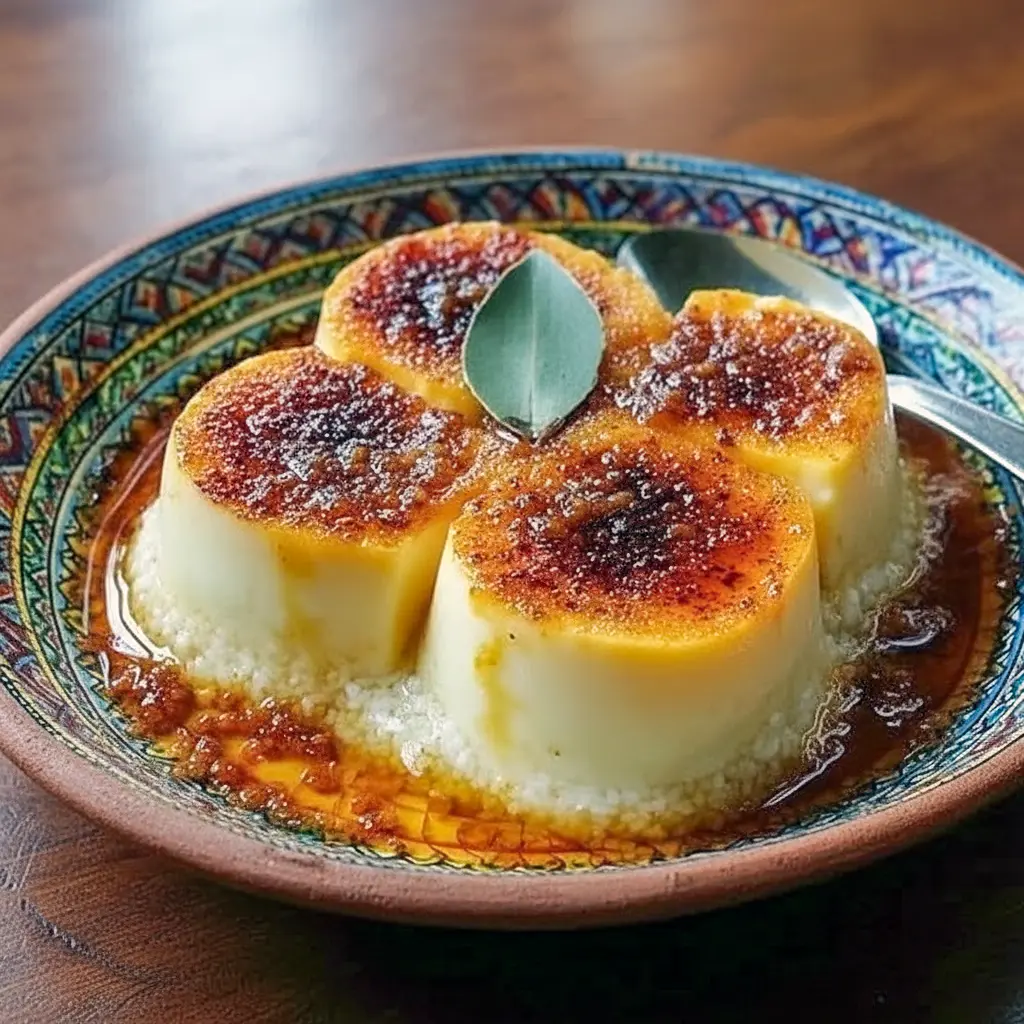
If you crave a silky, tropical Coconut Custard Recipe, you’re in the right place — this is comfort food with a passport. Get ready for a creamy, slightly caramel-kissed dessert that reads like a love letter to coconut and palm sugar.
Brief introduction to the recipe
This Thai Dessert Recipe blends simple pantry staples — eggs, coconut milk, palm sugar — into a custard that’s lush, smooth, and surprisingly easy. No weird equipment. No chef-level drama. Just whisk, strain, bake in a gentle water bath, and voilà: a dessert that tastes like sunshine. Want it with a chewy base? Add sticky rice. Want it fragrant? Toss in some pandan leaves. This dessert plays well with options.
Why you’ll love this recipe
Why waste time on complicated desserts when this Coconut Dessert takes 20 minutes to prep and bakes while you chill?
- It’s beginner-friendly and forgiving.
- It tastes exotic without exotic effort — perfect for testing out Exotic Desserts if you’re new to Asian flavors.
- Serve it warm, chill it, or layer it over rice for a textural game-changer.
- At about 350 calories per serving, it’s an indulgence you can enjoy responsibly.
The story behind the recipe
Think of this as a small trip to Thailand from your kitchen. Traditional Thai desserts reverently use coconut and palm sugar; this custard borrows that vibe and keeps the technique humble. Street vendors and home cooks alike love the silky finish and the tiny pops of toasted mung beans or coconut flakes that often accompany it. IMO, it’s the kind of dessert that makes people pause mid-conversation and actually eat slowly — that’s how you know it’s good.
Ingredients for Coconut Custard Recipe
Here’s the short list, then I’ll explain why each matters.
- Eggs
- Full-fat coconut milk
- Palm sugar (or brown sugar)
- Pinch of salt
- Vanilla extract
- Pandan leaves (optional)
- Sticky rice (optional; soaked and drained)
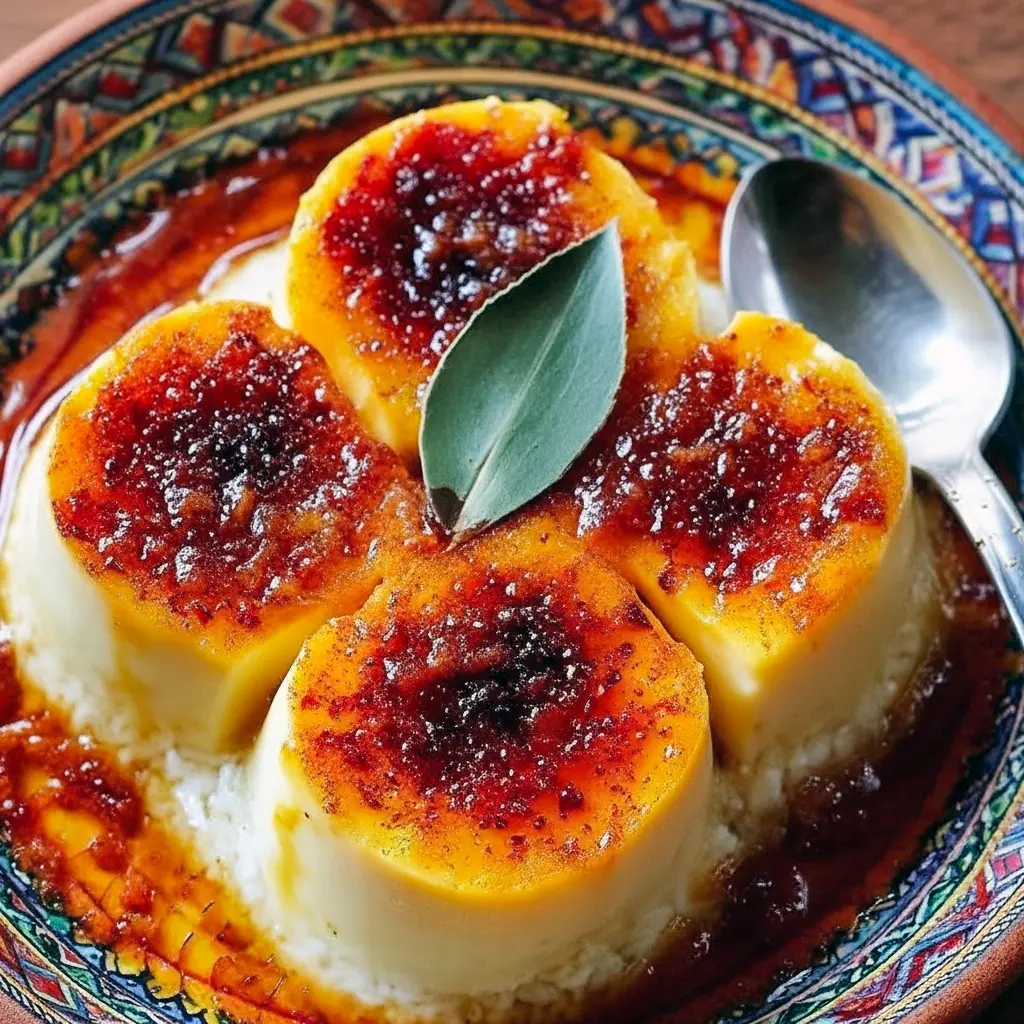
Why each ingredient matters
- Eggs give structure and the silky set. Don’t over-whisk; you want smooth, not foamy.
- Coconut milk is the flavor and fat core — use a rich one for the best mouthfeel.
- Palm sugar adds caramel notes that make this an authentic Thai Dessert; brown sugar works in a pinch.
- Salt balances sweetness — treat it like your best friend.
- Vanilla lifts and rounds the flavors.
- Pandan adds a subtle grassy perfume that feels tropical without dominating.
- Sticky rice at the bottom? Pure delight — it creates a satisfying chew that pairs perfectly with the custard’s silk.
Step-by-step “How to Make It”
Short and actionable — follow these and you’ll nail it.
- Preheat your oven to 350°F (175°C). If using, tuck pandan leaves at the bottom of your baking dish or ramekins.
- Whisk eggs gently until smooth. Avoid over-aerating. Tip: Use a fork or small whisk and focus on even blending, not speed.
- Add coconut milk, palm sugar, salt, and vanilla. Stir until the palm sugar dissolves.
- Pass the mixture through a fine sieve to remove any lumps or chalazae — this step makes the custard decadently smooth.
- If using sticky rice, spread a thin even layer across the bottom of the dish or ramekins now.
- Pour the sieved custard mixture carefully over the rice or directly into ramekins.
- Place filled containers in a larger baking pan. Pour hot water into the pan until it reaches halfway up the ramekins to create the water bath. This water bath prevents curdling and ensures a silky texture.
- Bake 45–60 minutes, until edges set and the center yields slightly but a thin-bladed knife comes out clean.
- Remove from water bath and cool to room temperature. Chill for a firmer texture, or serve warm for comfort. Don’t skip the resting time — it helps the custard finish its set.
Pro tips for perfect results
- Use full-fat coconut milk for richness — skim versions yield a grainy, thin custard.
- Strain the custard. Seriously — that sieve step raises the whole game.
- Water bath is non-negotiable if you want that glossy, even set. It’s the difference between “meh” and “chef’s kiss.”
- If your custard jiggles but the knife comes out clean, it’s done. It firms as it cools.
- Swap palm sugar for brown sugar only if you must; palm sugar brings that gentle caramel complexity associated with authentic Thai Desserts.
- FYI: Don’t blast it at high heat. Slow and steady prevents curdling.
Variations to try
Want to play? Here are fun riffs:
- Pandan-infused — tie pandan leaves into a knot, steep in the coconut milk, then remove before mixing with eggs. This makes a fragrant, green-hinted custard.
- Sticky rice base — layer sticky rice first for a Thai Recipes Dessert that feels like a full meal.
- Matcha dust — chill, then dust with matcha for a sophisticated color pop and a nod to other Asian flavors.
- Tropical parfait — layer custard with mango slices and toasted coconut flakes for a stunning glass presentation.
- Vegan-ish — try silken tofu + coconut milk + agar for a plant-based custard (texture will differ, but hey — options!).
- Crunchy top — sprinkle lightly toasted mung beans or chopped pistachios before serving for texture contrast.
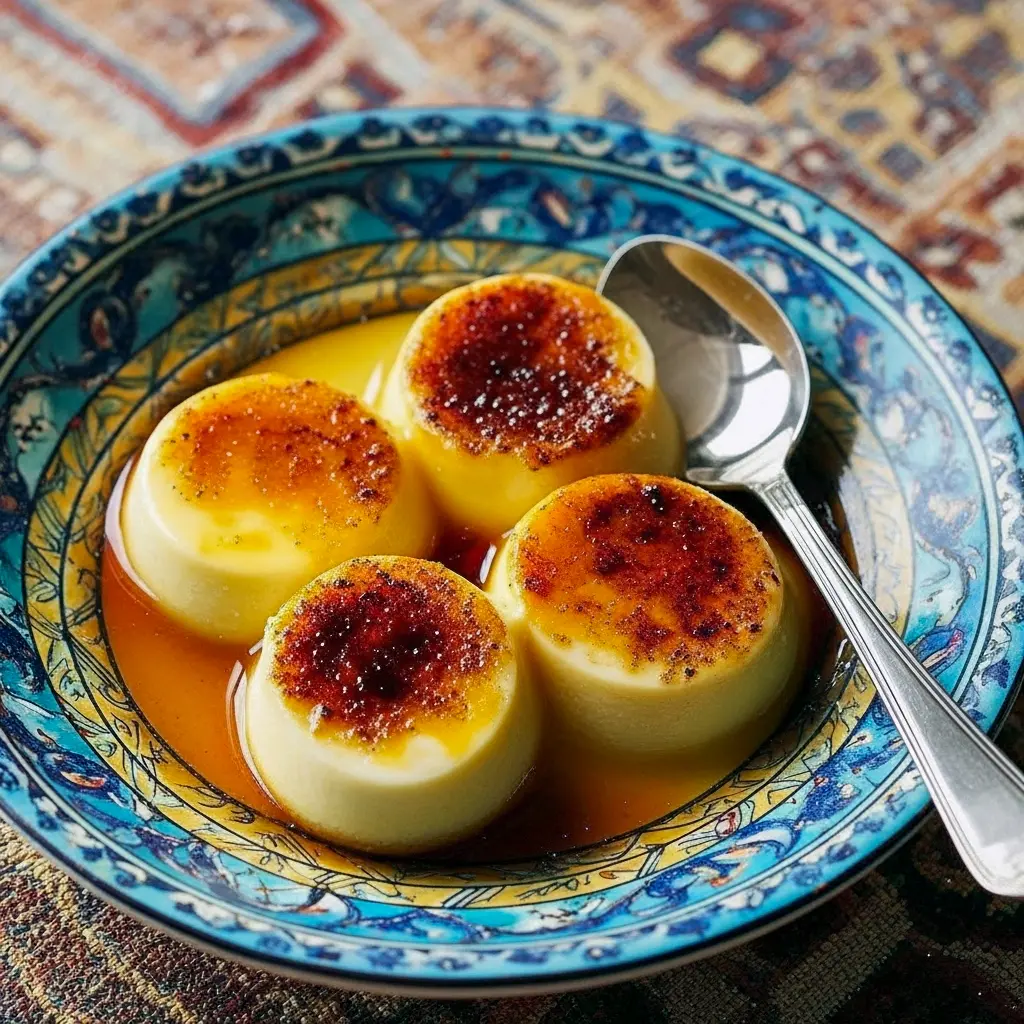
Best ways to serve (presentation ideas)
How you present this dessert matters. Small touches = huge impact.
- Serve warm in ramekins, top with fresh mango and a sprinkle of toasted coconut. Instant sunshine.
- Chill completely, then dust with cocoa or matcha for an elegant finish.
- Layer in a clear glass with berries to show off the custard’s creamy layers — great for parties.
- Drizzle a touch of coconut caramel and scatter crushed pistachios or mung beans for crunch and color.
- Ask yourself: classic or extra? Both work. Want applause? Add mango.
Quick tips for storage and leftovers
Custard is delicate. Store it smart.
- Refrigerate in airtight containers once cooled. It keeps well for up to 3 days.
- Cover ramekins with plastic wrap pressed onto the surface to prevent a skin from forming.
- Freeze only if you must; thaw slowly in the fridge and expect a slight texture change.
- If layered with sticky rice, store rice and custard together to keep moisture balanced.
FAQs
Can I use canned coconut milk?
Yes. Use a full-fat canned coconut milk for the creamiest result. Avoid watered-down coconut milk.
Why did my custard crack or become grainy?
You probably overcooked it or used too-high heat. Lower the oven temp and rely on the water bath to cook gently.
Can I use regular sugar instead of palm sugar?
You can, but brown or palm sugar gives that light caramel note characteristic of Thai Dessert Recipes. Plain white sugar will taste flatter.
How do I make it less sweet?
Reduce the sugar by 10–20% and add a little extra salt to keep flavors balanced.
Can I make this ahead for a party?
Absolutely. Make it the day before, chill, and bring to room temp or quickly warm before serving.
Troubleshooting (quick)
- If custard’s watery — underbaked; return to oven and check in 5–10 minute increments.
- If lumpy — you either didn’t strain or egg got scrambled from too-hot liquid. Strain and start over if necessary.
- If custard tastes too coconut-heavy — add a touch more vanilla or a pinch more salt to balance.
Final thoughts (wrap-up)
This Coconut Custard Recipe hits that sweet spot between comfort and exotic flair. It’s one of those dishes that looks fancy but behaves like a home cook’s dream — forgiving, quick, and crowd-pleasing. Whether you call it a Thai Dessert Recipe for a weeknight treat or a show-stopping element in a dessert spread of Thai Dessert Recipes, it delivers every time.
Want to experiment with more Coconut Desserts or expand into other Asian Dessert ideas? Try pairing this custard with toasted sesame brittle, or serve mini versions alongside sticky rice and mango for a tasting flight. My favorite finish? A whisper of pandan, a few toasted coconut chips, and that satisfying first spoonful where the silky custard meets a chewy rice pearl. Bliss.
Try it once and you’ll get why people call it irresistible. Feeling adventurous? Add the sticky rice and call it a full-on Thai Recipes Dessert experience.
If you make it, tell me how it turned out — warmed or chilled, pandan or plain, rice or no rice. Want a printable card version or a Pinterest-ready blurb? I’ll make it sparkle.
Follow me on Pinterest for daily new recipes.
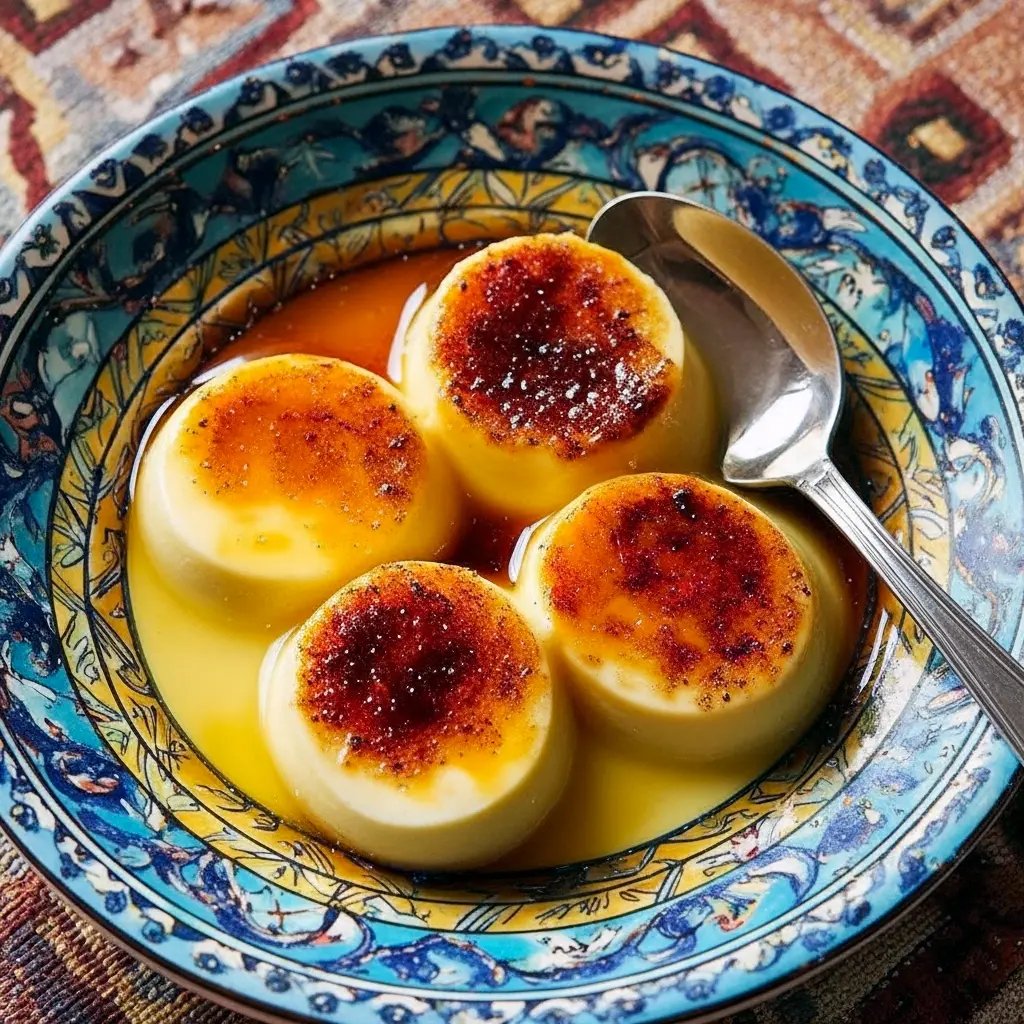
Irresistible Thai Coconut Custard Recipe — Classic Thai Dessert Recipe
- Prep Time: 20 minutes
- Cook Time: 1 hour
- Total Time: 1 hour 20 minutes
- Category: Dessert
Description
A silky, coconut-forward custard with warm notes of palm sugar and a hint of vanilla. Enjoy it straight from the oven or chilled — either way it’s creamy comfort with a tropical twist.
Ingredients
- 4 large eggs
- 1 cup full-fat coconut milk
- 3/4 cup palm sugar (brown sugar works as an alternative)
- 1/4 teaspoon salt
- 1 teaspoon vanilla extract
- 2 pandan leaves (optional — for fragrance)
- 1 cup sticky (glutinous) rice, soaked and drained (optional — for a chewy base)
Instructions
- Heat the oven to 350°F (175°C). If you’re using pandan, lay the leaves in the bottom of a baking dish or into individual ramekins.
- In a bowl, whisk the eggs gently until smooth and uniform. Avoid whipping in air.
- Stir in the coconut milk, palm sugar, salt, and vanilla. Mix until the sugar disappears and the mixture looks even.
- Pass the custard mixture through a fine mesh strainer to catch any stray bits or strings of egg — this step gives a silky finish.
- If you want the sticky rice layer, spread the drained rice evenly across the base of your dish or ramekins now.
- Carefully pour the strained custard over the rice or directly into the dish, filling each container evenly.
- Set the filled dishes inside a larger baking pan. Pour hot water into the outer pan until it reaches roughly halfway up the sides of the custard containers to form a gentle water bath.
- Bake for about 45 minutes up to 1 hour, until the edges are set and a thin knife inserted near the center comes out clean. A slight, gentle wobble in the middle is fine — it will firm as it cools.
- Remove from the water bath and let the custard cool to room temperature. Chill in the fridge if you prefer a firmer texture before serving.
Notes
- Pandan is optional but highly recommended if you want that subtle, grassy perfume.
- Try sprinkling cooked mung beans or small taro pieces over the sticky rice before pouring the custard for added texture.
- Palm sugar lends a mild caramel depth that’s very characteristic of Thai sweets; brown sugar is a decent substitute but the flavor will shift slightly.
- For a lighter version, use reduced-fat coconut milk or a sugar substitute — the texture and sweetness will change, so adjust to taste.
- Store leftovers refrigerated in an airtight container for up to 3 days. If you used sticky rice, keep the custard and rice together to preserve moisture.