Creamy Mustard Roasted Potatoes: A Cozy, Comfort-First Side Dish
Mustard Roasted Potatoes are the kind of side dish that quietly steals the whole dinner. You go in expecting a humble bowl of potatoes, and then suddenly you are standing over the stove with a spoon, “just tasting” the sauce five times in a row. Respectable behavior? Debatable. Effective? Absolutely.
This recipe brings together golden roasted baby potatoes and a silky mustard cream sauce with just enough tang to keep every bite interesting. It feels rustic, hearty, and a little bit fancy without becoming annoying about it. You know the type: comforting enough for a weeknight, but polished enough to sit beside a holiday roast and hold its own.
If winter dinner called and asked for something rich, cozy, and a little magical, this would be the answer. These Mustard Roasted Potatoes fit right into the world of Winter Dinner Dishes, especially when you want something that feels warm, filling, and deeply satisfying.
And yes, hobbits would absolutely approve. Probably enthusiastically.
Why You’ll Love These Mustard Roasted Potatoes
These potatoes do a lot with very little effort. The roasting gives you crisp edges and tender centers. The sauce adds creamy richness. The mustard brings a bright, sharp bite that keeps the dish from feeling heavy. It is a very good balance, IMO.
They also work for almost any cold-weather meal. Think roast chicken, duck, pork tenderloin, or a simple vegetable-forward spread. They fit into Comforting Dinner menus without trying too hard. That alone makes them a keeper.
You will also love how flexible the recipe feels. Use baby potatoes, small Yukon Golds, or even chopped larger potatoes if that is what you have. The sauce leans on pantry-friendly ingredients, and the final dish looks like you fussed much more than you actually did. Always a nice little win.
And if you are building a holiday menu, these are a strong contender for Classic Christmas Sides. They bring richness, color, and a touch of elegance without the usual holiday chaos. No one ever complains when creamy potatoes show up at the table. That would be weird.
A Little Winter Feast in Middle Earth Inspiration
The idea behind this recipe fits beautifully into a winter table inspired by Tolkien’s world. The Shire, after all, would never settle for sad food. Not on a cold evening. Not with a proper fire going. Not with second supper on the horizon.
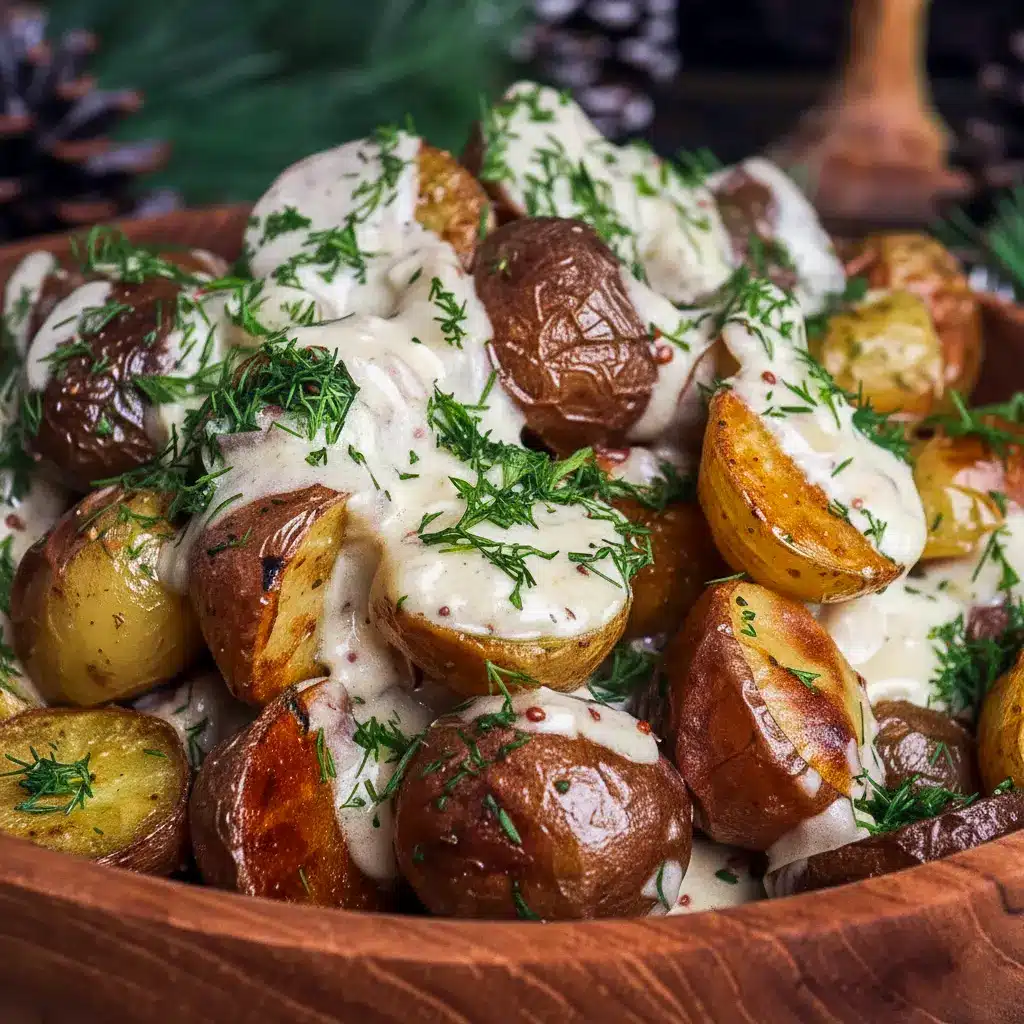
These Mustard Roasted Potatoes feel especially fitting for a Potato Hobbit moment. They are hearty, cozy, and built around everyone’s favorite humble root vegetable. They have the kind of warmth that makes you want to pull on a blanket, pour something hot, and settle in for a long, delicious evening.
If you are planning a themed menu or just love the idea of rustic, storybook comfort food, this dish lands perfectly. It feels like one of those Great Food Ideas that makes people smile before they even take a bite.
The Key Ingredients (and Why You Need Them)
Below are the main ingredients and the role each one plays. I am leaving out the amounts here, because the printable recipe card has those details covered. This section is about understanding the ingredients so you can cook with a little more confidence and a lot less panic.
- Baby potatoes create the ideal texture. Their thin skins roast beautifully, and their creamy interiors absorb the sauce without falling apart. Yellow-fleshed and red-skinned potatoes both work well.
- Olive oil helps the potatoes brown and crisp in the oven. It also carries the seasoning across the surface so every bite tastes properly seasoned instead of randomly blessed.
- Kosher salt and black pepper build the base flavor. Potatoes love salt. They just do. It is not a debate.
- Butter gives the sauce richness and a smooth finish. It also helps the aromatics bloom in the skillet.
- Shallots bring a softer, sweeter onion flavor than regular onions. They blend into the sauce instead of shouting over it.
- Garlic adds depth and that savory background note that makes the whole sauce taste complete.
- Broth gives the sauce body and helps loosen the cream while adding flavor. You can use chicken or vegetable broth depending on the meal you are serving.
- Dijon mustard brings clean, sharp tang. It gives the sauce its backbone and keeps the flavor bright.
- Grainy mustard adds texture and a more rustic mustard flavor. Together with Dijon, it gives the sauce complexity and character.
- Heavy cream creates the silky, luscious texture that makes the sauce feel indulgent. This is where the dish moves from good to “please pass that again.”
- Cornstarch helps thicken the sauce so it clings nicely to the potatoes instead of sliding off like it has somewhere better to be.
- Fresh lemon juice lifts the whole dish. It cuts through the richness and keeps the final flavor lively.
- Fresh dill adds freshness, color, and a subtle herbal note that works beautifully with mustard. It is a strong recommendation here. Fresh dill makes the dish taste brighter and more finished. Parsley can work in a pinch, but dill brings the magic.
These ingredients work together to create a sauce that feels creamy, tangy, and savory all at once. That is exactly why these potatoes land so well as Side Dishes Made With Potatoes. They are familiar, but not boring. Cozy, but not bland. That balance matters.
How to Make It
The process is simple, but a few details make a big difference. The potatoes need enough time to roast properly, and the sauce needs a little attention so it turns smooth and glossy.
Roast the Potatoes
Start by heating your oven to 400°F. Spread the potatoes on a baking sheet and drizzle them with olive oil. Season them generously with salt and pepper, then toss everything together so the potatoes get coated evenly.
Spread them out in a single layer. Do not crowd the pan. If the potatoes are stacked on top of each other, they will steam instead of roast, and that is a completely different mood.
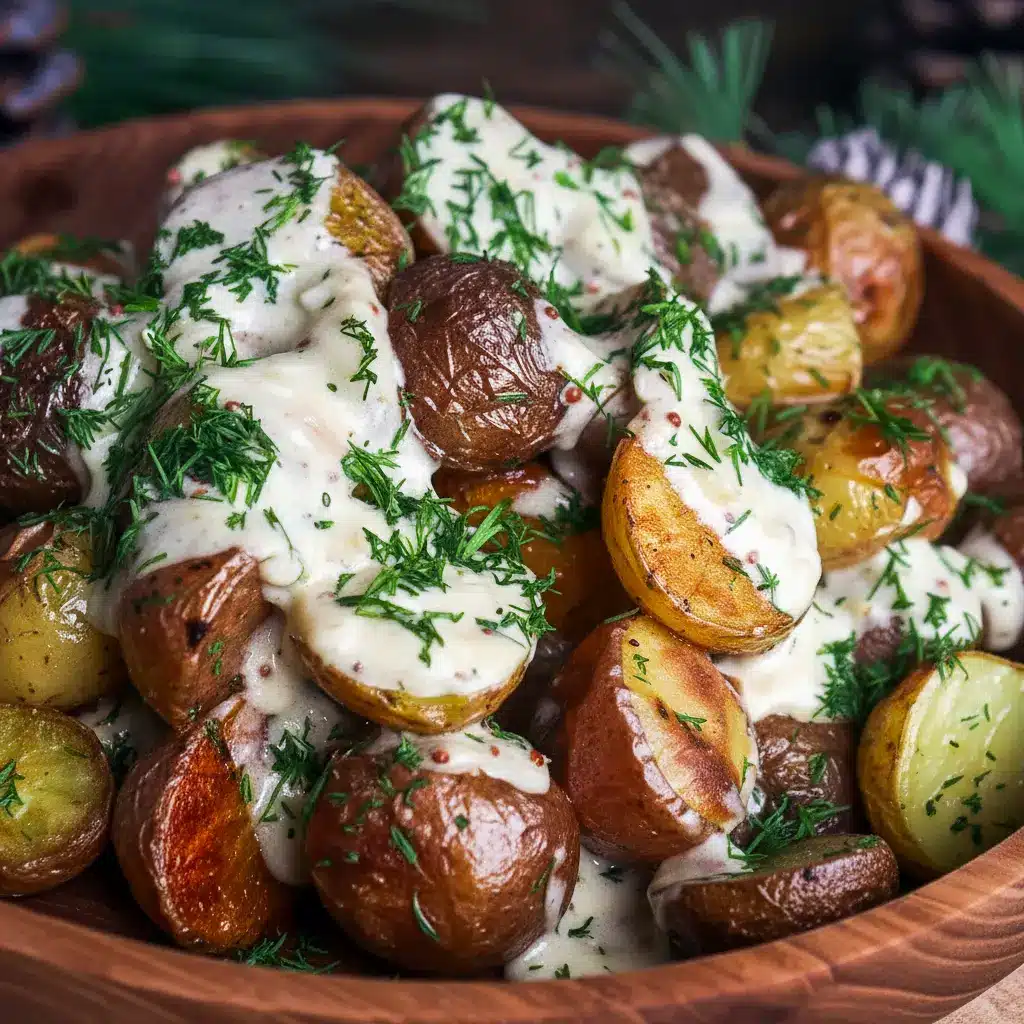
Roast for 35 to 40 minutes, or until the potatoes turn golden brown and fork-tender. You want crisp edges, soft centers, and a little color on the outside. That roasted flavor gives the whole dish its backbone.
Make the Mustard Cream Sauce
While the potatoes roast, start the sauce. Set a skillet over medium heat and melt the butter with a bit of olive oil. Add the finely diced shallot and cook until softened. Then add the garlic and cook briefly until fragrant.
Now pour in the broth and bring it to a gentle simmer. Whisk in the Dijon mustard, grainy mustard, salt, and pepper. Let the broth simmer for a few minutes so it reduces slightly and concentrates the flavor.
Add the cream and bring the sauce back to a simmer. In a small bowl, stir the cornstarch with water to make a slurry. Whisk that into the sauce and cook for another minute or so until the sauce thickens.
Finish with lemon juice and taste for seasoning. The sauce should taste creamy, tangy, savory, and bright all at once. If it tastes a little flat, it probably needs a tiny pinch more salt or a bit more lemon. Sauces are like people. They usually need a little adjustment before they settle into themselves.
Assemble and Serve
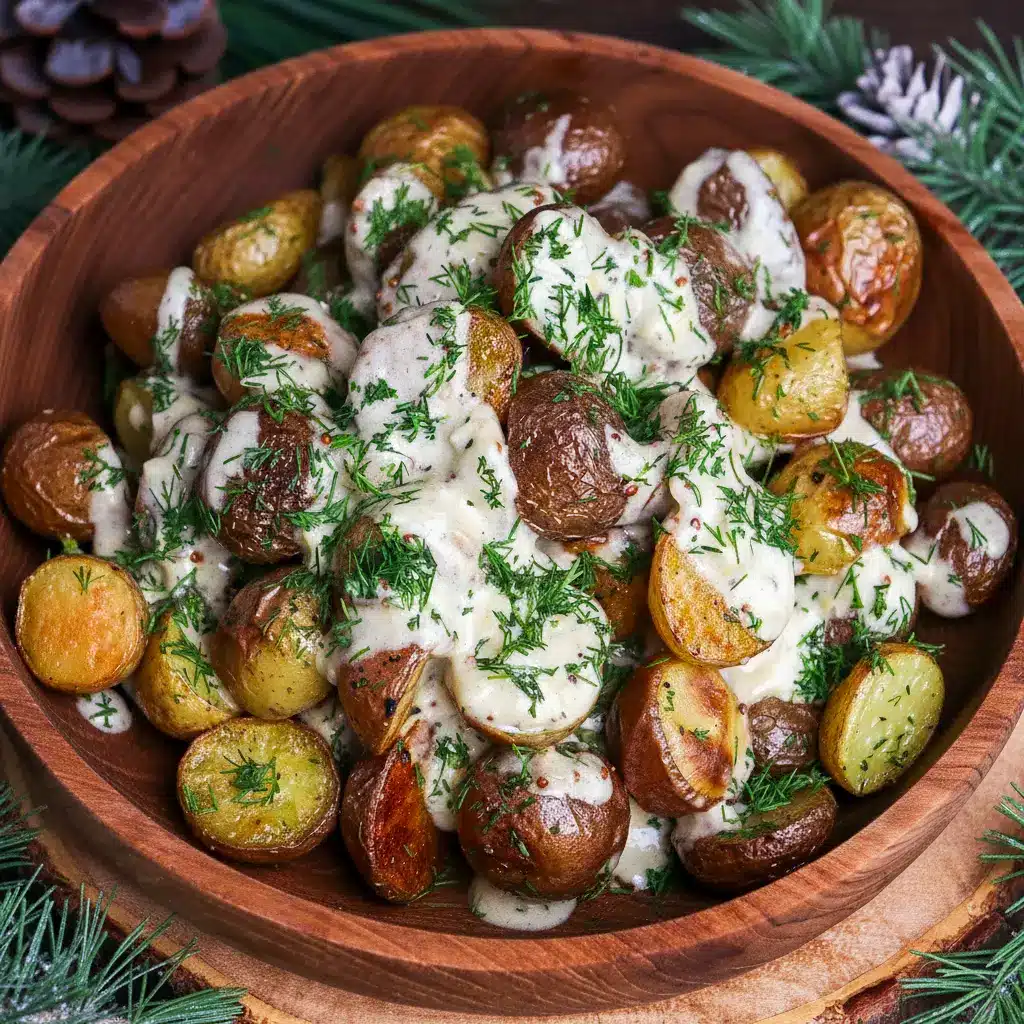
Transfer the roasted potatoes to a serving bowl or platter. Spoon some of the mustard cream sauce over the top, then scatter fresh dill over everything. Repeat with the remaining potatoes, sauce, and herbs until all the goodness is layered in.
Serve immediately while the potatoes are hot and the sauce is glossy. This is not the kind of dish that likes to wait around and “cool off emotionally.”
Pro Tips for Perfect Results
- Roast until deeply golden. Pale potatoes are fine in theory and disappointing in practice. Let the edges brown for the best flavor.
- Cut larger potatoes into even pieces. That helps them cook at the same speed. Uneven chunks can give you a bowl of overcooked and undercooked potatoes living side by side in chaos.
- Use fresh mustard, not an old jar from the back of the fridge. Mustard loses punch over time. You want bold flavor here.
- Whisk the sauce constantly after adding the slurry. That keeps it smooth and prevents clumps. No one invited cornstarch lumps to this dinner.
- Taste the sauce before serving. The balance of salt, mustard, cream, and lemon should feel lively. A good sauce should make you want another bite immediately.
- Add the dill at the end. Fresh herbs keep their color and flavor best when you finish the dish with them.
Variations to Try
This recipe already has a strong personality, but it also leaves room to play.
- For a deeper savory profile, add a pinch of thyme to the sauce. It works nicely with the mustard and gives the dish a slightly more woodsy feel.
- For a richer version, stir in a little grated Parmesan at the end. That moves the sauce closer to a cheesy cream sauce, which is never a bad place to land.
- For a more rustic presentation, leave the smaller potatoes whole and smash a few lightly before saucing them. That gives you more surface area for the sauce to cling to. Very efficient. Very delicious.
- If you want a brighter finish, add extra lemon zest along with the juice. It sharpens the flavor and makes the whole dish feel a little more springlike, even in the middle of winter.
- If dill is not your thing, use parsley. It changes the flavor profile, but it still adds freshness and color. The result leans a little more toward a classic potato side and a little less toward a herb-forward sauce.
- You could even turn this into a heartier meal by adding roasted mushrooms or caramelized onions. That pushes the dish toward a full Comforting Dinner plate instead of a side dish only.
Best Ways to Serve These Potatoes
These Mustard Roasted Potatoes are incredibly versatile, which is part of their charm.
They pair beautifully with roast chicken, pork chops, beef tenderloin, or lamb. The creamy mustard sauce cuts through richer proteins and keeps the plate balanced. That makes them especially useful for elegant dinners or holiday spreads.
They also work surprisingly well next to duck. If you are planning Side Dishes For Duck Confit, this dish brings a creamy, tangy contrast that can hold up against the richness of the duck without competing with it. That is a very nice place to be.
For a smaller meal, serve them with a green salad and some crusty bread. Suddenly you have dinner that feels intentional and satisfying, not like leftovers in a nice bowl.
And yes, they are excellent on a winter buffet. They sit proudly among other Winter Dinner Dishes and look like they absolutely belong there.
Storage and Leftovers
Store any leftover potatoes and sauce in an airtight container in the refrigerator for up to 3 days. Keep them together or separate if you prefer the potatoes to reheat with a little more texture.
Reheat gently on the stovetop or in the microwave. Add a splash of broth or cream if the sauce thickens too much in the fridge. Cold cream sauce can get a little dramatic, but it usually comes back around with a little heat and moisture.
For best results, reheat the potatoes uncovered in the oven or air fryer before adding the sauce. That helps bring back some of the roastiness. Leftovers are good, but slightly revived leftovers are better.
I would not recommend freezing the finished dish. Cream sauces can separate after thawing, and potatoes can turn grainy. Not ideal. The fridge is the better choice here.
FAQs
Can I use a different type of potato?
Yes. Baby potatoes work best, but Yukon Golds, fingerlings, or small red potatoes also do well. Just cut larger potatoes into evenly sized pieces before roasting.
Can I make the sauce ahead of time?
You can make the sauce a little ahead and reheat it gently. Whisk well as it warms so it stays smooth. Add a splash of broth or cream if needed.
What if I do not have fresh dill?
Fresh parsley works as a substitute, though the flavor will be milder and less distinctive. Dill gives the dish its brightest finish, so use it if you can.
Is this dish too rich for everyday dinner?
Not at all. It feels rich, but the mustard and lemon keep the sauce from becoming heavy. That balance makes it suitable for both weeknights and special meals.
Could this count as a side dish for the holidays?
Absolutely. These potatoes fit beautifully into Classic Christmas Sides because they feel festive, hearty, and a little bit luxurious without being complicated.
Can I make this dish without cream?
You can try a lighter version with half-and-half, but the sauce will be thinner and less silky. The cream really gives it that luxurious texture.
Does this work as a warm snack?
Yes, actually. A small bowl of these potatoes can easily serve as one of those Warm Winter Snacks that disappears faster than it should. A very normal thing to do with potatoes, honestly.
Final Thoughts
These Mustard Roasted Potatoes are cozy, creamy, and deeply satisfying in the way only good potato dishes can be. They bring together tender roasted potatoes, a tangy mustard cream sauce, and fresh dill for a side dish that feels both rustic and polished.
They fit beautifully into a winter menu, especially when you want something that feels like a cross between comfort food and a little bit of culinary theater. They are perfect for a Side Dish Cold evening, a holiday table, or any dinner that needs a dependable star on the plate. And if you are hunting for Great Food Ideas that make people go back for seconds, this one checks that box with room to spare.
So whether you serve them for a quiet night in, a festive gathering, or a storybook-inspired feast in the spirit of the Shire, these potatoes deliver. Warm, creamy, savory, and just tangy enough to keep things interesting. That is a pretty good deal for a humble potato, no?
Follow me on Pinterest for daily new recipes.

Creamy Mustard Roasted Potatoes — Easy Comfort Food Dinner Side
- Yield: 6 Servings 1x
- Diet: Gluten-Free, Vegetarian
Description
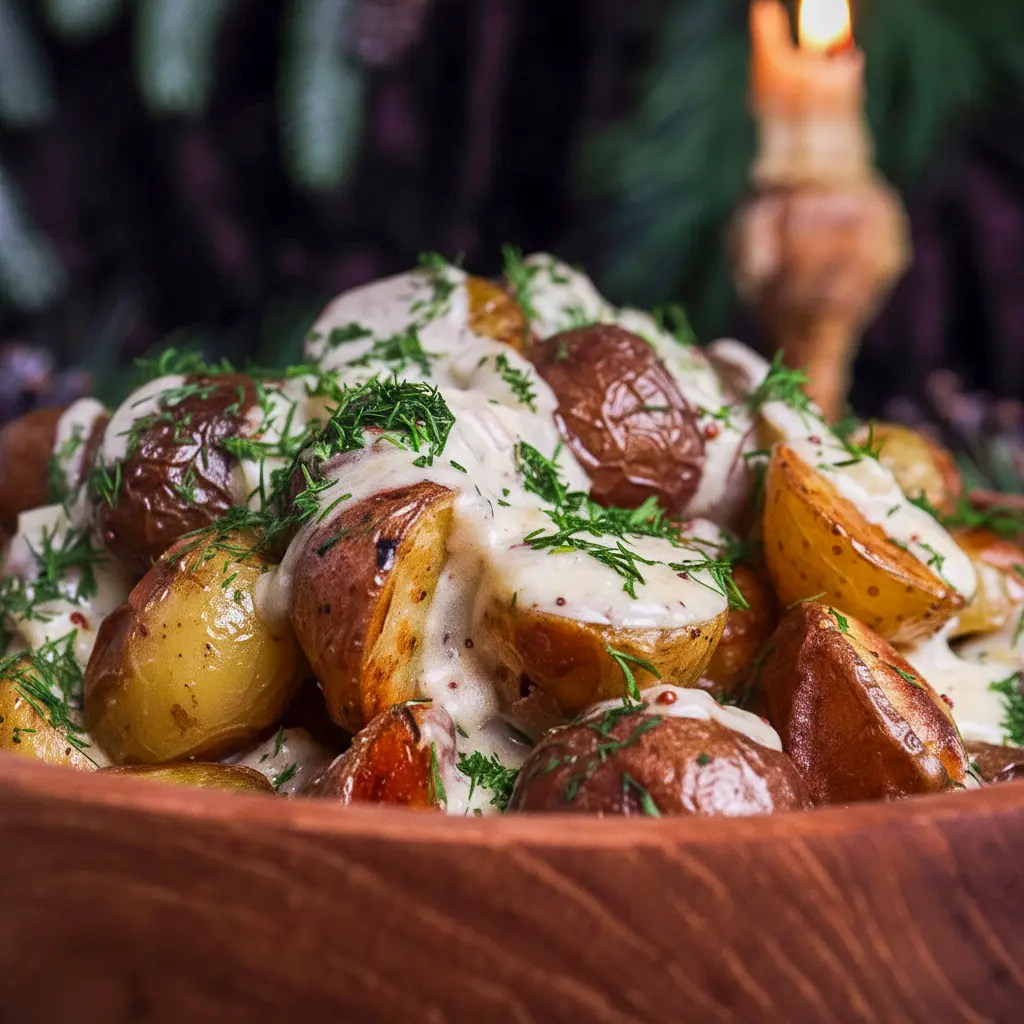
These Creamy Mustard Roasted Potatoes are roasted until golden and then coated in a silky mustard cream sauce with fresh dill. They make a cozy, flavorful side dish with just the right balance of rich, tangy, and savory.
Ingredients
- 3 lb baby potatoes
- Extra virgin olive oil, for tossing
- Kosher salt, to taste
- Black pepper, to taste
- 1 tablespoon butter
- 1 shallot, very finely chopped
- 2 garlic cloves, minced
- 1 cup chicken broth or vegetable broth
- 1 1/2 tablespoons Dijon mustard
- 1 tablespoon grainy mustard
- 3/4 cup heavy cream
- 1 1/2 teaspoons cornstarch
- 2 teaspoons water
- 1 teaspoon lemon juice
- 2 tablespoons chopped fresh dill, plus more if desired
Instructions
-
Roast the potatoes
Heat the oven to 400°F. Place the potatoes on a baking sheet, drizzle them with olive oil, and season generously with salt and pepper. Toss well so they are evenly coated, then spread them out in a single layer. Roast for 35 to 40 minutes, or until the potatoes are browned and fork-tender. -
Build the sauce
While the potatoes bake, set a skillet over medium heat and melt the butter with 1 tablespoon olive oil. Add the chopped shallot and cook for 3 to 4 minutes, just until softened. Stir in the garlic and cook for another minute. -
Add the liquid and mustard
Pour in the broth carefully and bring it to a gentle simmer. Whisk in the Dijon mustard, grainy mustard, 1/2 teaspoon salt, and 1/4 teaspoon pepper. Let the mixture simmer for a few minutes so it reduces by about one-third. -
Finish the cream sauce
Stir in the heavy cream and return the sauce to a simmer. In a small bowl, mix the cornstarch with the water to create a slurry. Whisk the slurry into the sauce and cook for about 1 minute, until the sauce thickens and bubbles. Stir in the lemon juice and taste for seasoning. -
Assemble and serve
Layer the roasted potatoes in a serving bowl and spoon some of the sauce over the top. Scatter with chopped dill. Repeat with the remaining potatoes, sauce, and dill until everything is used. Serve warm.