Best Ever Almond Cream Cake — light, tender, and dreamy
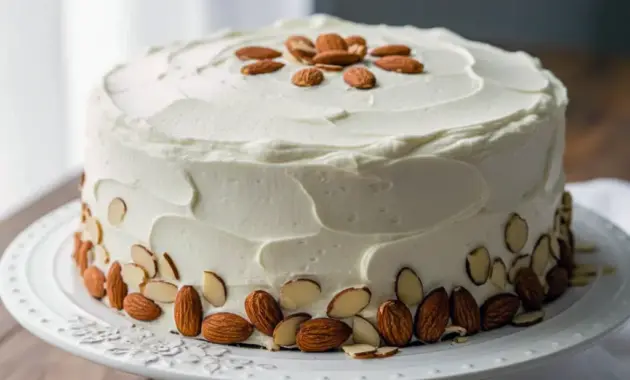
If you’re chasing a showstopping cake that still feels homey, Best Ever Almond Cream Cake delivers: a soft white almond layer stacked with a pillowy cooked-cream frosting and finished with toasted sliced almonds. It tastes delicate, looks elegant, and holds up well for slicing and serving.
Why this almond cake deserves a spot on your table
- The crumb is moist but stable — it slices cleanly and won’t fall apart.
- The frosting is a cooked, whipped cream-style finish that’s less cloying than buttercream yet perfectly rich.
- It’s versatile: swap the flavorings to make a White Almond Cake Recipe Easy or amplify the almond note for a Bakery Style Almond Cake result.
- The texture and balance make it a contender for “Best White Almond Cake Recipe” in any family poll.
Ingredient notes — what each component does (short blurbs)
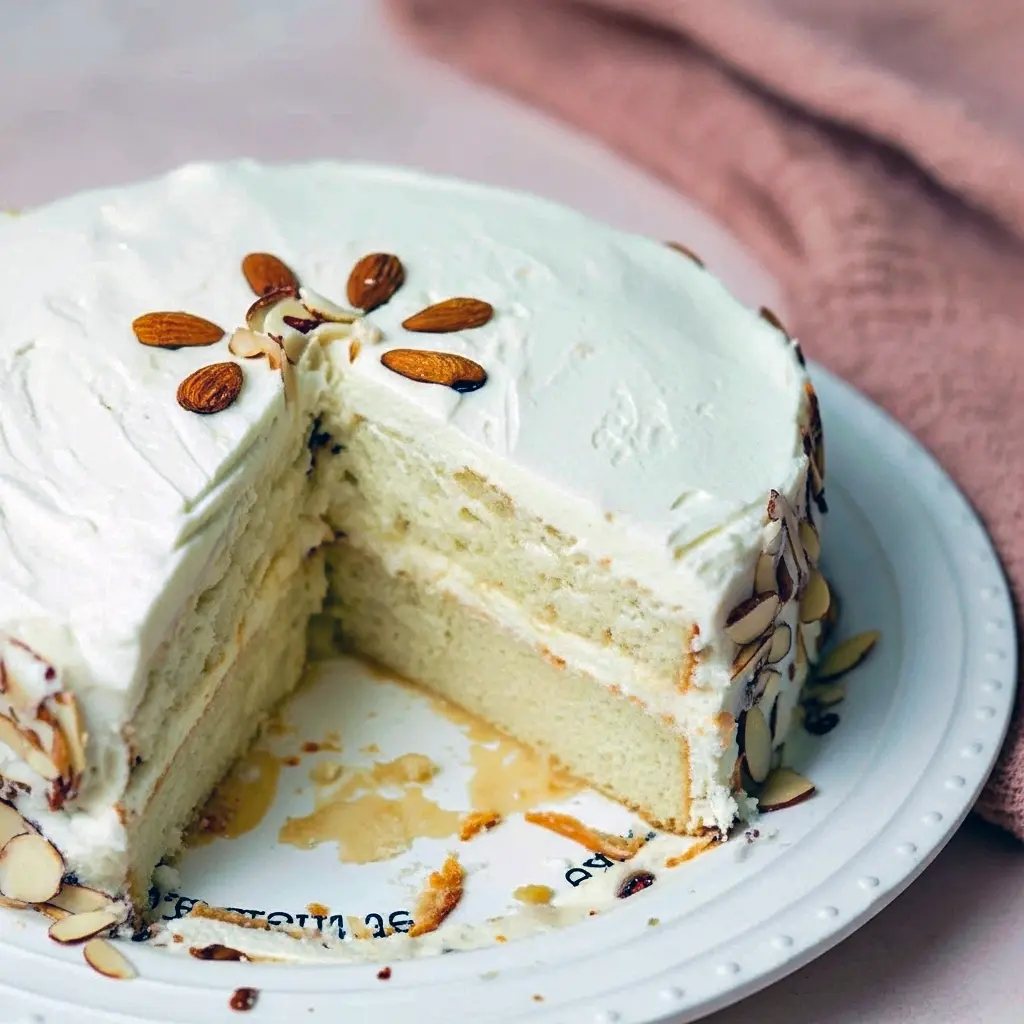
Cake dry base — cake flour gives the softest crumb; it keeps gluten low so the cake stays tender rather than chewy.
Leaveners & salt — baking powder and salt set structure and balance sweetness.
Eggs (whites and whole eggs) — whipped whites contribute lift and lightness while the yolks add richness.
Butter & sugar — creamed to create a stable base that browns gently in the oven.
Milk & almond extract — milk adds moisture; almond extract brings that subtle nutty profile that makes this an Almond Flavored Cake Recipe rather than a plain white cake.
Cooked flour frosting base — a cooked milk-and-flour custard gets cooled and whipped with butter and sugar to create a silky Almond Cake Frosting Recipe alternative to buttercream.
Almonds for garnish — sliced almonds pressed into the sides or scattered on top give crunch and visual drama, finishing it like a professional Almond Creme Cake.
How to make it — step-by-step
1. Prep pans and oven
Preheat your oven to 350°F (175°C). Grease and lightly flour two 8-inch round cake pans (or line them with parchment). This ensures the cake releases cleanly and bakes evenly.
2. Whip the egg whites
Whisk the specified amount of egg whites with the whisk attachment until they hold stiff peaks. Transfer them to the fridge while you finish the batter. This step boosts lift without making the cake fragile.
3. Cream the butter and sugar
In the mixer bowl, cream the softened butter until pale. Add granulated sugar and beat until airy. This traps tiny air bubbles that expand in the oven and help the crumb rise.
4. Combine dry ingredients & liquid
Whisk cake flour with baking powder and salt. In a separate small bowl, combine milk with almond extract. Alternate adding dry mixture and milk to the creamed butter-sugar mixture, beginning and ending with the dry ingredients. Mix just until incorporated.
5. Fold in the whites
Gently fold the chilled, stiff egg whites into the batter in two additions. Use a rubber spatula and a light cutting-and-lifting motion — do not overmix. Keep the air you worked so hard to build.
6. Bake the layers
Divide batter evenly between prepared pans. Bake until the tops bounce back with a gentle touch and a toothpick shows a few moist crumbs — about the time indicated in most oven guides for this pan size. Remove to a wire rack and cool completely.
7. Make the cooked-flour frosting (the showstopper)
Whisk flour into milk in a saucepan. Cook over medium-low, stirring constantly, until the blend thickens to a mashed-potato consistency. This can take 10–15 minutes — stir without fail to avoid scorching. Remove from heat and cool to room temperature (speed it up with an ice bath if you must). Stir in almond extract.
Meanwhile, process or use superfine sugar so it dissolves smoothly. Beat room-temperature butter with the sugar until fluffy. Add the cooled cooked mixture and whip with a whisk attachment until the frosting transforms into a light, silky whipped cream–like spread. This is your homemade take on an Almond Cake Frosting Recipe that melts on the tongue.
8. Assemble the cake
Place one layer on a cake plate. Spread a generous layer of frosting, set the second layer on top, and crumb-coat if you like. Finish by covering the top and sides with the remaining frosting. Press sliced almonds onto the sides and arrange a few whole almonds on top.
Bold tip: cool the cooked-flour base fully before adding it to butter; warm custard will melt the butter and ruin the texture.
Pro tips for perfect results
- Measure flour by weight or spoon it into the cup and level — too much flour makes the cake heavy.
- Room-temp eggs and butter mix more uniformly, producing a better crumb and smoother frosting.
- Whip egg whites to stiff peaks but fold gently — vigorous mixing kills volume.
- Cook the flour mixture long enough; undercooking leaves a pasty flavor and thin frosting.
- If you want a shortcut, you can adapt a boxed mix into an Almond Cake Box Recipe by adding almond extract and swapping some liquid for milk. It’s a valid life hack for busy bakers.
Variations & flavor riffs
- Fill layers with raspberry jam for a fruity contrast and call it a twist on the Best Ever Almond Cream Cake.
- Use vanilla bean instead of almond extract for a classic white cake profile.
- Fold a little toasted almond meal into the batter for deeper almond notes and a slightly denser crumb.
- For a Bakery Style Almond Cake, brush the layers with a light almond syrup before frosting to lock in moisture and add shine.
How to serve and pair
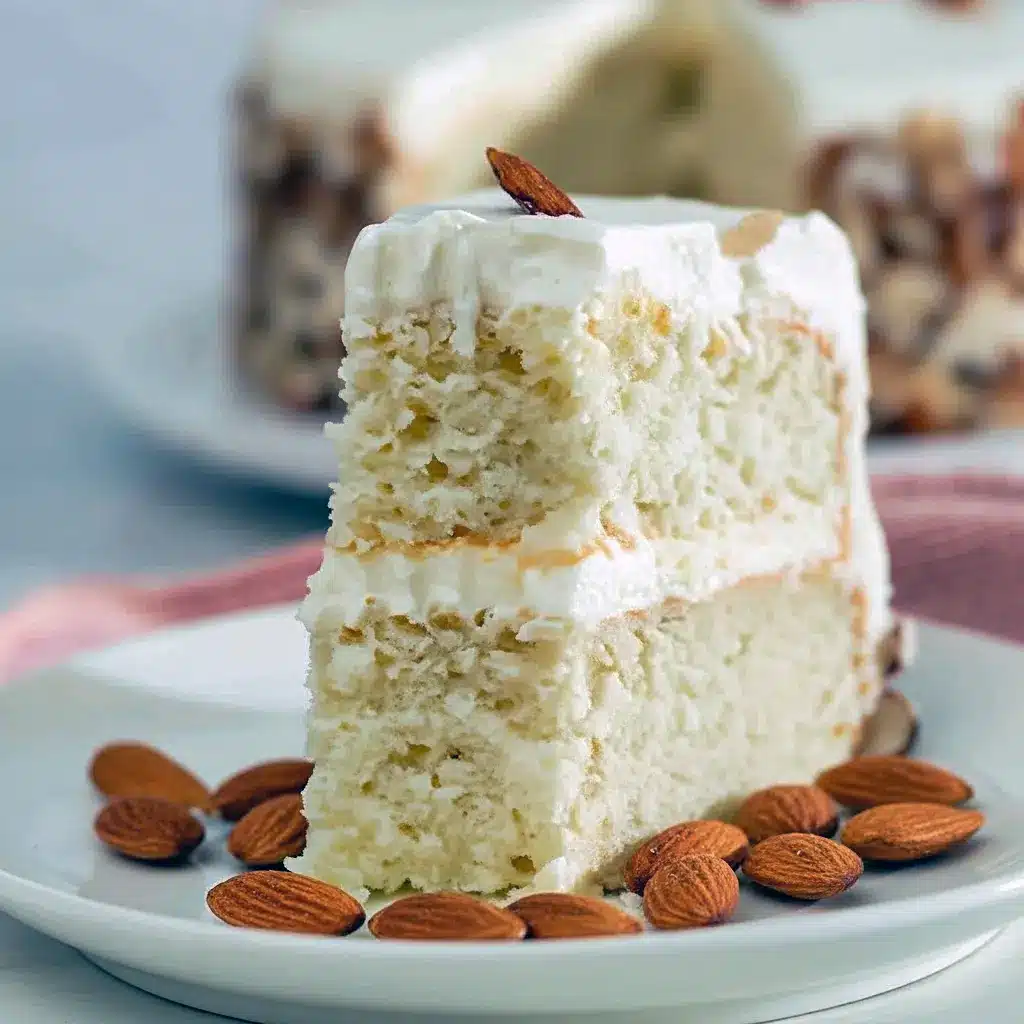
Serve slices at room temperature so the frosting shows its full silkiness. This cake pairs beautifully with a bright espresso, a subtle Earl Grey, or a glass of cold milk. For a dessert spread, include small fruit tarts or a citrus curd to cut the richness and create a visually appealing Dessert Spread.
Storage & make-ahead
- Store at room temperature in a cake dome for up to 24 hours if your kitchen is cool.
- Refrigerate covered for up to 5 days; bring to room temperature before serving for best flavor.
- You can make the cooked-flour base a day in advance and chill it; whip it with butter the next day to finish the frosting.
- Freeze unfrosted layers tightly wrapped for up to 2 months; thaw in the fridge and frost once softened.
Bold tip: chill the frosting before applying if your kitchen is warm; it pipes and spreads neater.
FAQs — quick answers
Can I substitute all-purpose flour for cake flour?
Yes — but use slightly less and mix in a tablespoon of cornstarch per cup to mimic cake flour’s lower protein.
Is the cooked-flour frosting hard to make?
It’s just a bit different — patience while cooking and cooling is the trick. The whipping stage pulls everything into a luscious finish.
Can I make this dairy-free?
Use plant-based milk and vegan butter brands designed for baking; texture will vary but the method remains the same.
Will this cake work from a box mix?
Totally. Try a white cake box, add almond extract, and consider the Almond Cake Box Recipe approach for a faster path that still tastes great.
Final thoughts — why this recipe works
This Almond Creme Cake balances a gentle almond aroma, a resilient yet tender crumb, and an indulgent frosting that isn’t over the top. If you want something that reads “fancy” on the table but is totally achievable at home, this cake fits the bill. Whether you call it a Best White Almond Cake Recipe or simply your new favorite celebratory bake, expect compliments.
Bake it for birthdays, showers, or a weekend splurge — and don’t be surprised if it earns a permanent place on your “Desserts To Make” list.
Follow me on Pinterest for daily new recipes.
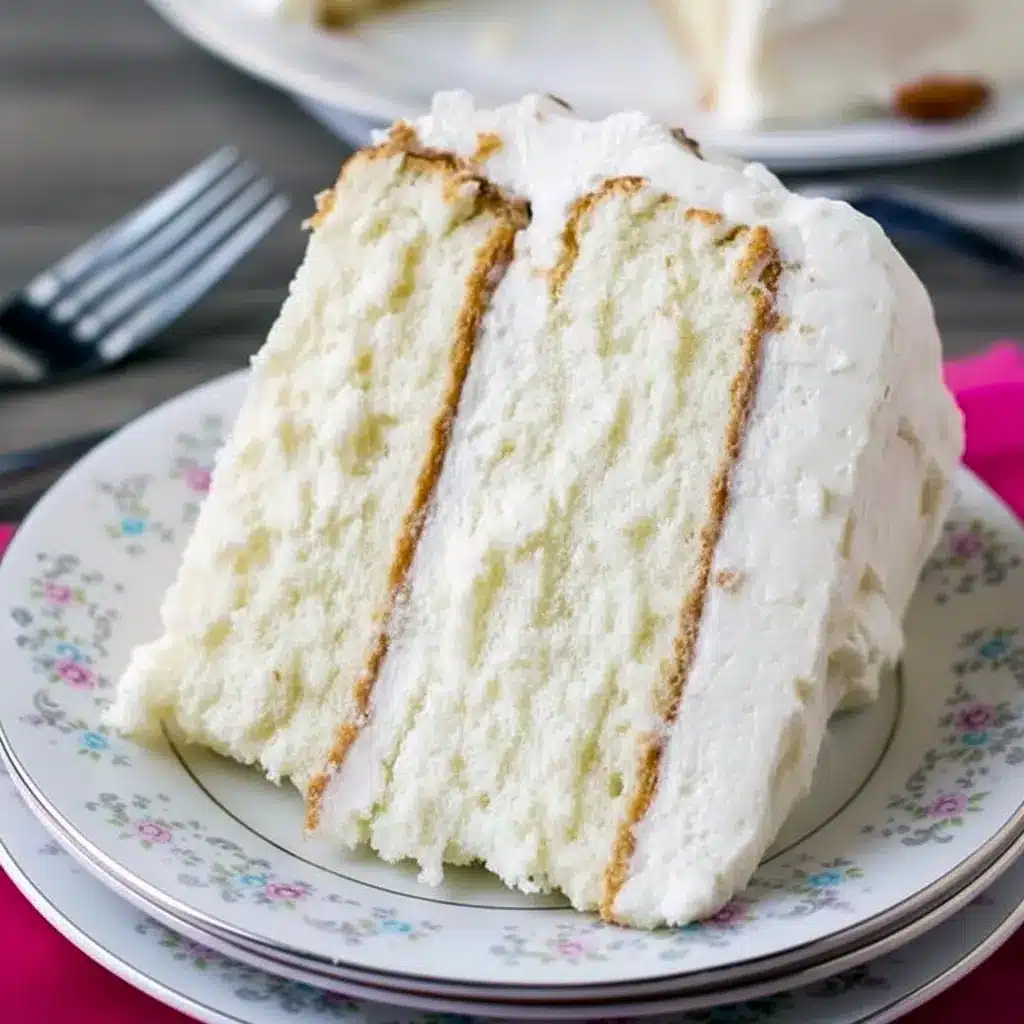

Best Ever Almond Cream Cake — Rich, Cloud-Like Layers
- Prep Time: 50 minutes
- Cook Time: 45 minutes
- Total Time: 1 hour 35 minutes
- Yield: 15 servings 1x
- Category: Dessert
- Cuisine: American
Description
This Almond Cream Cake is airy, moist, and finished with a silky cooked-and-whipped frosting. The crumb stays delicate while the frosting melts on the tongue — top it with sliced almonds for the classic bakery look.
Ingredients
Cake
- ¾ cup plus 3 Tbsp egg whites (about 6–7 large egg whites)
- 1 cup salted butter, softened to room temperature
- 1½ cups granulated sugar
- 3 cups cake flour, spooned and leveled
- ½ tsp fine salt
- 2 tsp baking powder
- 1 cup 2% milk
- 1 tsp almond extract
Frosting (cooked-flour base, whipped with butter)
- ½ cup + 2 Tbsp all-purpose flour
- 2 cups 2% milk
- 1½ tsp almond extract
- 2 cups granulated sugar (you can pulse this briefly in a food processor to make it finer)
- 2 cups salted butter, softened
Decoration
- Sliced almonds and a few whole almonds for the top
Instructions
- Preheat the oven to 350°F (175°C). Grease and flour two 8-inch round cake pans (or line with parchment).
- In a clean mixing bowl, whip the egg whites with the whisk attachment until they hold stiff peaks. Transfer the whites to another bowl and chill briefly while you work on the rest of the batter. Bold tip: use a clean, grease-free bowl — egg whites won’t whip properly if any fat is present.
- In the mixer bowl (use the paddle/flat beater), cream the softened butter until it turns pale. Add the granulated sugar and beat until the mixture becomes light and fluffy.
- In a medium bowl, whisk together the cake flour, salt, and baking powder. In a separate small bowl, combine the milk and almond extract.
- Add the dry ingredients to the creamed butter and sugar alternately with the milk mixture, beginning and ending with the dry mix. Mix just until everything comes together.
- Gently fold the stiff egg whites into the batter in two additions using a rubber spatula. Use a slow, lifting motion — do not overfold, or you’ll lose air and the cake will turn dense.
- Divide the batter between the prepared pans and smooth the tops. Bake until the tops spring back lightly and a toothpick comes out with a few moist crumbs, about 25–27 minutes. Let the cakes cool in the pans for 10 minutes, then turn out onto a rack to cool completely.
Frosting (cooked-flour whipped buttercream)
- In a medium saucepan, whisk the flour into the milk. Cook over medium-low heat, stirring constantly, until the mixture thickens to a mashed-potato consistency — this can take 10–15 minutes. Keep stirring so it doesn’t scorch. Bold tip: cook the mixture until very thick; undercooking makes a runny frosting.
- Remove from the heat and cool the pudding-like mix to room temperature. To speed this, sit the pan in a bowl of ice water and stir occasionally. Once cool, stir in the almond extract.
- Meanwhile, process the granulated sugar briefly in a food processor if you want an ultra-smooth frosting (optional). In a stand mixer, beat the softened butter with the sugar until pale and fluffy, about 4–5 minutes.
- Add the cooled flour-milk mixture to the creamed butter and beat on high with the whisk attachment until the frosting becomes light and airy — it will transform into a whipped, silky texture after several minutes. Scrape the bowl often so everything blends evenly.
Assemble
- Place one cake layer on a cake plate. Spread a generous layer of frosting over the top.
- Set the second layer on top and use the remaining frosting to cover the top and sides of the cake.
- Press sliced almonds onto the sides and arrange a few whole almonds on top for a simple, elegant finish.
Notes
- Notes & troubleshooting
- This recipe uses about 6–7 large egg whites. If you measure by volume, aim for roughly ¾ cup plus 3 tablespoons.
- Measuring flour correctly matters. Spoon flour into the measuring cup and level it off — don’t pack. Too much flour makes the cake heavy. Bold tip: weigh flour if possible for best results.
- If you only have unsalted butter, add ¼ tsp salt to the cake batter.
- Chill the cooked flour mixture completely before adding to the butter; warm pudding will melt the butter and thin the frosting.
- Storage
- Store the frosted cake in the refrigerator up to 5 days. Bring to room temperature before serving so the frosting softens and the flavors open. You can freeze unfrosted layers, tightly wrapped, for up to 2 months; thaw in the fridge before finishing.
Nutrition
- Calories: 650kcal
- Sugar: 49g
- Sodium: 444mg
- Fat: 38g
- Saturated Fat: 24g
- Carbohydrates: 70g
- Protein: 6g
- Cholesterol: 102mg