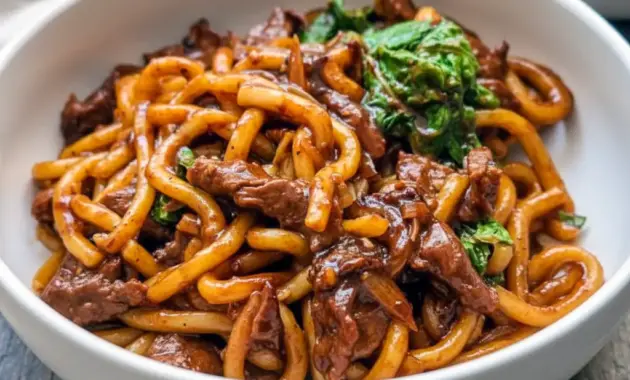
Beef Udon: fast, peppery comfort in 20 minutes
Beef Udon delivers chewy noodles, tender beef, and a punchy black-pepper sauce that feels both restaurant-worthy and totally doable on a weeknight. Want big flavor without the fuss? This recipe gives you that chewy udon bite, savory-marinated beef, and a glossy sauce that clings to every strand. Ready in about 20–30 minutes, it’s exactly the kind of Noodles dish you’ll want on repeat.
Why you’ll love Beef Udon
Why does Beef Udon hit so hard in the comfort-food department? First, it balances texture and flavor: soft, springy udon; quick-seared beef; crisp-tender veg; and a savory sauce with a noticeable black-pepper kick. Second, it’s fast. Marinate the beef while your pan heats, and dinner practically cooks itself. Third, it’s flexible — scale it up for guests, swap proteins, or tone the heat to please picky eaters. Sound like your kind of weeknight win? Mine too.
The Key Ingredients (and Why You Need Them) for Beef Udon
Below I list the main players (no amounts here — printable card has those). I’ll explain what each one does so you can adapt with confidence.
- Udon noodles — thick, chewy, and forgiving. Fresh udon gives the best texture; dried or frozen work fine in a pinch.
- Thinly sliced beef — ribeye, flank, or sirloin. Thin slices cook fast and stay tender. Tip: chill the meat slightly to slice paper-thin.
- Garlic & onion — foundational aromatics. They build savory depth and sweet notes that balance the pepper.
- Black pepper — the star. Use freshly cracked pepper for the sharpest, floral heat. The coarser the grind, the more texture and bite you’ll get.
- Soy sauce, oyster sauce, and a touch of sugar — umami anchors. Soy provides salt; oyster brings richness; a pinch of sugar rounds the edges.
- Sesame oil — finish with a drizzle for a warm, nutty perfume.
- Chinese cabbage or bok choy — leafy crunch and color. They wilt quickly and pair beautifully with udon.
- Cornstarch slurry — a tiny bit of slurry gives you that glossy sauce that clings to noodles without getting gummy.
This combo yields a balanced Beef Dishes experience that feels familiar from casual Asian restaurants but with homemade freshness.
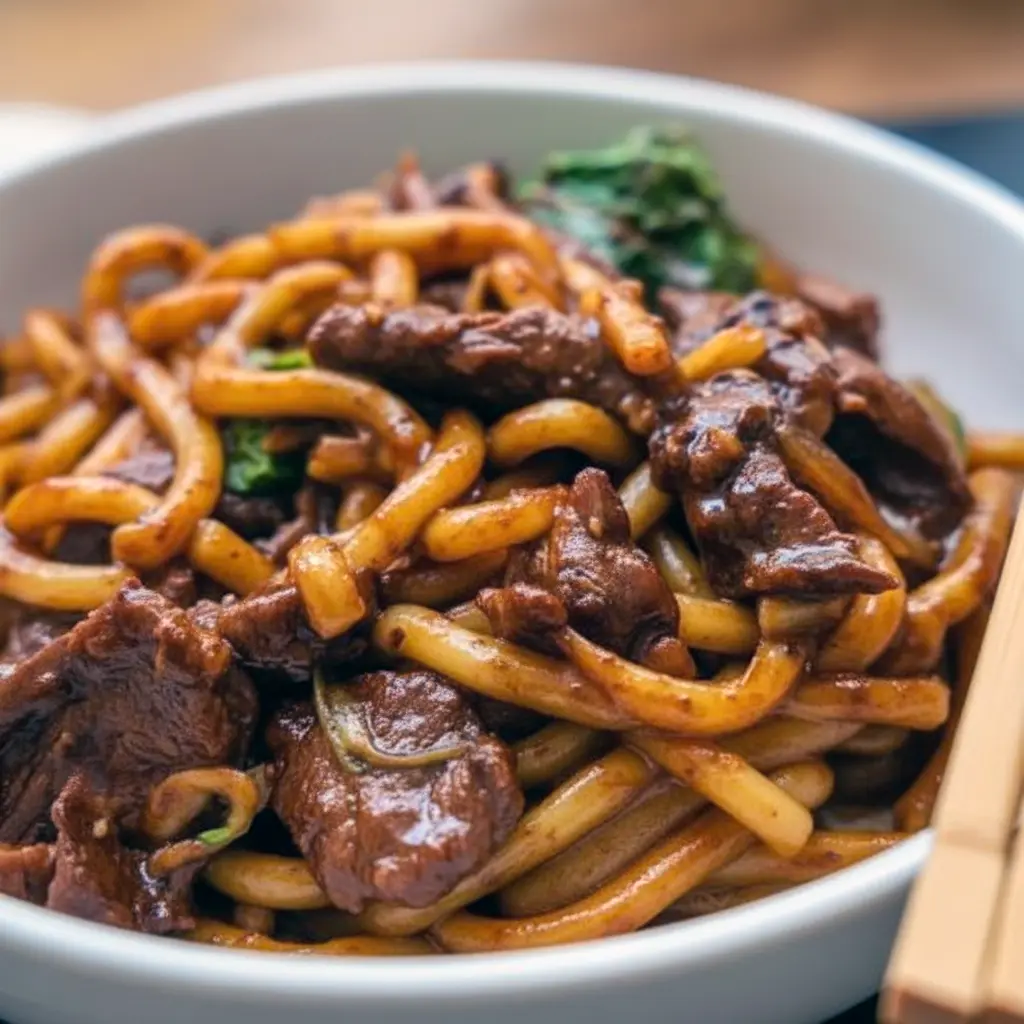
How to Make Beef Udon
Follow this streamlined workflow and you’ll nail it every time.
- Marinate the beef. Toss thin beef slices with minced garlic, sesame oil, soy sauce, oyster sauce, a splash of vinegar, and a little cornstarch slurry. Let it rest for 10–30 minutes. This adds flavor and improves texture.
- Mix the black-pepper sauce. Combine dark soy, oyster sauce, water, freshly ground black pepper, and a touch of starch. Set aside — this is your quick finish.
- Cook the udon. Boil fresh or frozen udon per package instructions until just tender. Drain and rinse under cool water to stop cooking. Keep them loose — no one wants clumps.
- Sear the beef. Heat a wok or large skillet until hot, add oil, and quickly sear the beef in batches until browned but still juicy. Remove and rest. Don’t overcook.
- Stir-fry aromatics & veg. With the same pan, add a splash more oil, sauté sliced onion until soft, toss in garlic, then add Chinese cabbage or bok choy. Cook until crisp-tender.
- Bring it together. Return beef to the wok, add udon, pour in the black-pepper sauce, and toss. Let the sauce thicken and cling to everything. Finish with a drizzle of sesame oil and a grind of fresh black pepper. Serve hot.
Bold tip: finish with more freshly cracked black pepper at the end for a bright, in-your-face hit.
Pro Tips for Perfect Beef Udon
- Slice beef extra thin. Freeze for 20–30 minutes first — it makes razor-thin slices easier.
- Don’t crowd the pan. Work in batches so the beef sears instead of steams. Searing = flavor.
- Use fresh black pepper. Pre-ground pepper lacks the floral heat that defines this dish.
- Rinse udon after cooking. This stops carryover cooking and keeps the texture springy.
- Control starch. Add cornstarch slurry to the sauce gradually — you want a glossy coat, not a gluey mess.
- Taste and adjust. Soy sauces vary, so taste before adding more salt. Add a pinch of sugar if the sauce tastes too sharp.
- FYI: If you like butter in your savory stir-fries (no judgment), a small pat at the end adds richness and sheen.
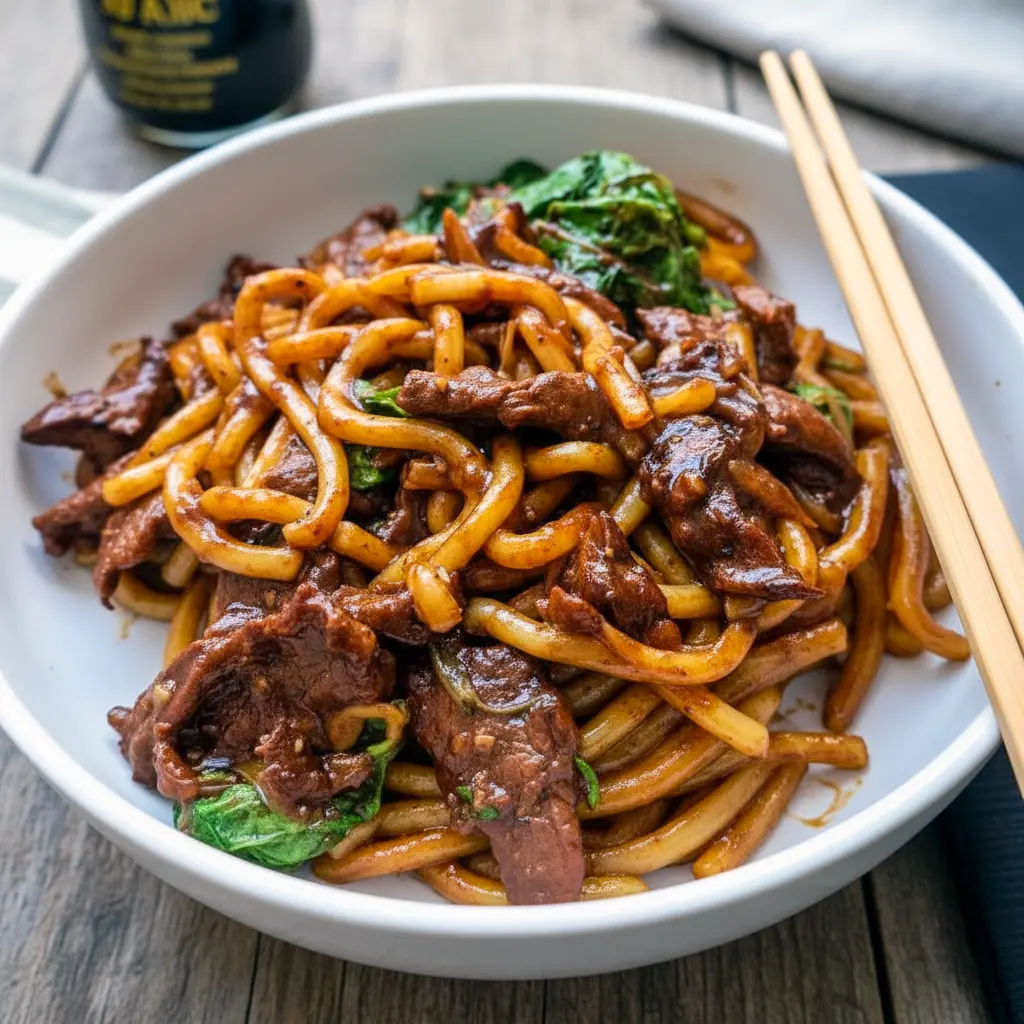
Variations of Beef Udon to Try
- Vegetarian twist: Swap beef for seared shiitake and tofu. Use vegetarian oyster sauce.
- Spicy black-pepper beef udon: Amp up fresh pepper and add a spoonful of chili crisp or sriracha.
- Seafood option: Replace beef with prawns or scallops — cook briefly so they stay tender.
- Health-forward: Add lots of veggies (broccoli, snap peas, carrot ribbons) to make it a more Plats Healthy meal.
- Saucy noodles: Use extra sauce and toss in a handful of baby spinach at the end to wilt into the mix.
These swaps keep the core idea intact while letting you tailor the dish to mood, pantry, or diet.
Best Ways to Serve Beef Udon
What pairs well with this rich, peppery bowl? Keep it simple.
- Toppings: sliced green onions, toasted sesame seeds, nori strips, or a soft-boiled egg.
- Sides: a crisp cucumber salad, quick pickled radish, or steamed edamame for texture contrast.
- Drinks: a light lager or an unoaked Riesling complements the savory profile.
- Presentation: serve in shallow bowls, top with a scattering of greens and a final crack of pepper. It looks like a million bucks but took a fraction of the time.
This approach highlights the Food Dishes vibe — satisfying, balanced, and crowd-pleasing.
Storage & Leftovers for Beef Udon
- Fridge: Store in an airtight container for up to 3 days. Keep sauce and noodles together; toss gently when reheating.
- Reheat: Warm in a skillet over medium-low heat with a splash of water or broth to loosen the sauce. Avoid microwaving at full power — it toughens the beef.
- Freezing: I don’t recommend freezing assembled udon; noodles get mushy. If you must, freeze sauce and beef separately, then reheat and toss with freshly cooked noodles.
- Make-ahead: Marinate the beef and prep sauce ahead; cook noodles and stir-fry when ready. This short-circuits dinner time.
Bold tip: reserve a little of your noodle-cooking water (if using dried udon you boiled) — its starch helps emulsify the sauce when reheating.
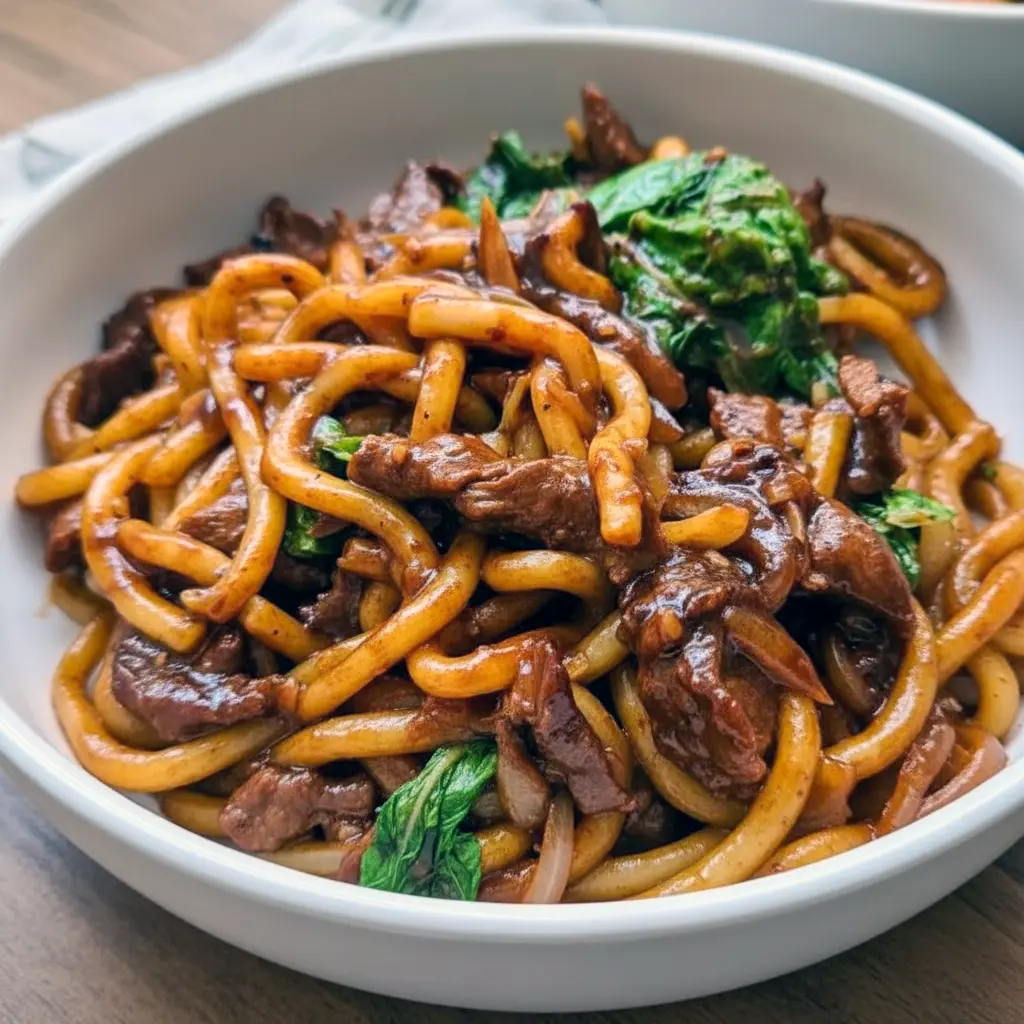
Beef Udon FAQs
What cut of beef is best for Beef Udon?
Go with thinly sliced ribeye, flank, or sirloin. They cook fast and stay tender.
Can I use a different noodle?
Absolutely. Soba, rice noodles, or even spaghetti will work in a pinch. Udon’s chewiness, though, is part of the charm.
How much black pepper is too much?
Start conservatively. Add more at the end. Fresh cracked pepper tends to taste stronger than pre-ground, so adjust to your heat tolerance.
Is this an Asian recipe?
Yes — it fits squarely into Asian Cooking and pulls from Japanese restaurant-style udon stir-fries. It also pairs well with broader Asian Dishes and Asian Recipes traditions.
Can I make it gluten-free?
Use tamari or coconut aminos in place of soy sauce and choose gluten-free udon or rice noodles.
Final thoughts on Beef Udon
Beef Udon hits the comfort-food sweet spot: quick, bold, and endlessly tweakable. It gives you the restaurant vibe — chewy Noodles, savory beef, glossy sauce — without hours of prep. Serve it on a weekday and watch everyone do the “wow, this is great” nod. Serve it for friends and claim you spent the afternoon (I won’t tell).
If you love Beef Recipes or crave fast Asian Recipes that don’t compromise on flavor, this is a keeper. IMO, it’s one of those dishes that proves simple techniques and fresh ingredients beat complicated recipes most nights. Try it this week and let me know how you jazzed it up — extra greens, more heat, or a squeeze of lime? I’m curious. And if you want a printable recipe card, shopping list, or social-ready captions to promote your dinner, I can make those next. Bon Appétit
Follow me on Pinterest for daily new recipes.
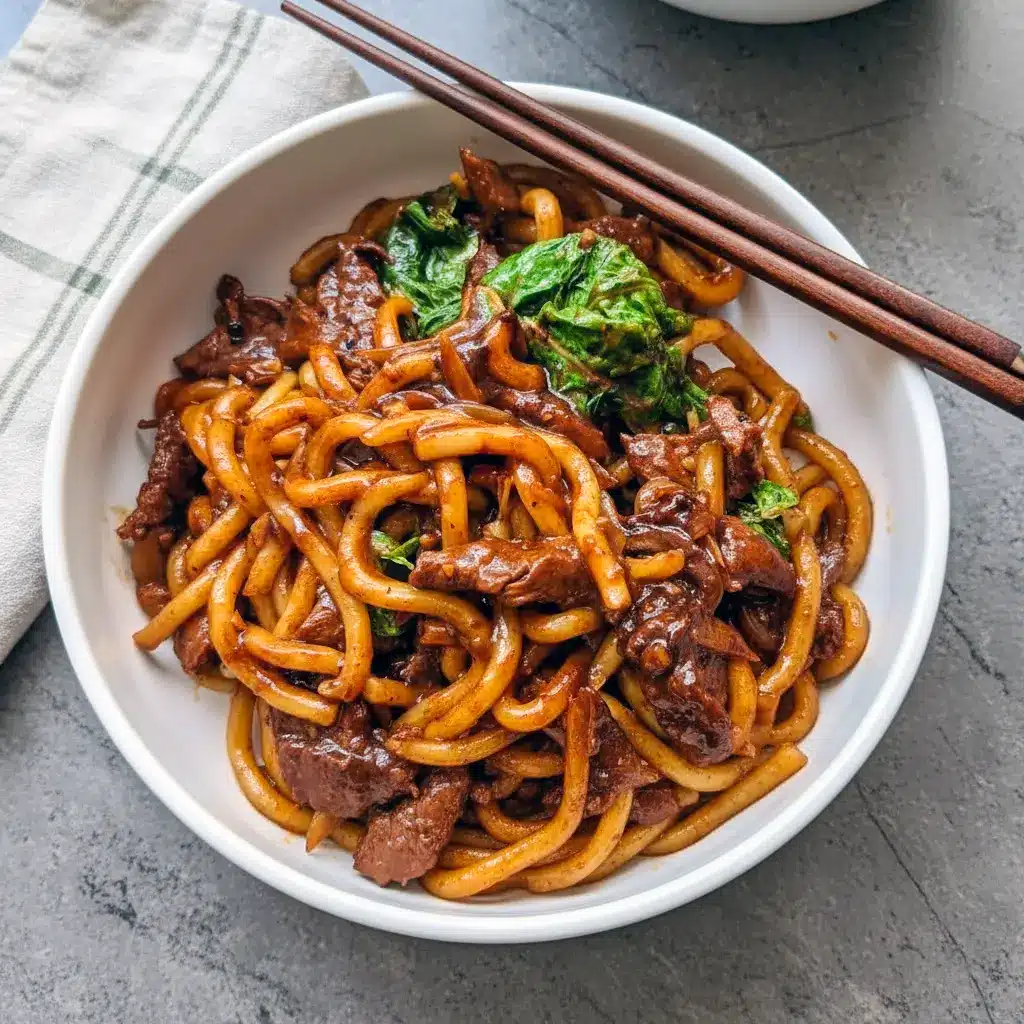

Quick Black Pepper Beef Udon Stir Fry – Easy Weeknight Dinner
- Prep Time: 10 minutes
- Cook Time: 10 minutes
- Total Time: 20 minutes
- Category: Dinner
Description
A speedy weeknight stir-fry: tender strips of beef tossed with springy udon and a bold black-pepper glaze. Ready in about 20–30 minutes and built for big flavor with minimal fuss.
Ingredients
- 2 packs udon noodles (fresh or frozen)
- A handful Chinese cabbage (or any quick-cooking leafy green)
- 1 tbsp garlic, minced
- 1 small white onion, thinly sliced
- Salt, to taste
- A pinch of sugar, to taste
- 200 g thinly sliced fresh beef (ribeye, flank, or sirloin work well)
For the beef marinade
- 1 clove garlic, minced
- 1 tsp sesame oil
- 1 tbsp soy sauce
- 1 tsp oyster sauce (or vegetarian oyster sauce)
- 1 tsp cornstarch (or potato starch) mixed with a little water to make a slurry
- 1 tsp Chinese white rice vinegar (or rice wine vinegar)
For the black pepper sauce
- 3 tbsp dark soy sauce
- 1 tbsp oyster sauce
- 2 tsp freshly ground black pepper (adjust to taste)
- 3 tbsp water
- 1/2 tsp potato starch (or cornstarch) dissolved in a little water
Instructions
-
Marinate the beef. In a bowl, mix the garlic, sesame oil, soy sauce, oyster sauce, vinegar, and the cornstarch slurry. Add the sliced beef, toss well, and let it sit for about 10 minutes while you prep everything else. This tenderizes and seasons the meat.
-
Mix the sauce. In a small dish, whisk together dark soy, oyster sauce, freshly ground pepper, water, and the dissolved potato starch. Set aside — this will finish the stir-fry with a glossy, peppery coating.
-
Cook the udon. Bring a pot of water to a boil and loosen the udon for 1–2 minutes until just pliable. Drain and shake off excess water. You want chewy, not mushy.
-
Sear the beef. Heat a wok or large skillet over medium-high heat with a splash of oil. Add the marinated beef in a single layer and toss until the edges brown — about 2–3 minutes. Remove the beef to a plate. Don’t overcrowd the pan; sear in batches if needed.
-
Aromatics & veg. Add another tablespoon of oil to the pan, then stir-fry the minced garlic and sliced onion until fragrant and softened. Toss in the Chinese cabbage and cook until it’s crisp-tender.
-
Bring it all together. Return the beef to the pan, add the cooked udon, then pour in the black-pepper sauce. Stir and toss constantly until the sauce thickens and evenly coats the noodles and beef. Adjust seasoning with salt or a pinch of sugar if the sauce needs balancing.
-
Finish & serve. Give everything one last toss to combine, then plate immediately. Grind a little extra black pepper over the top for a bright finish.
Pro tip: Freeze the beef for 20–30 minutes before slicing if you want super-thin, restaurant-style strips. Also, reserve a splash of noodle cooking water if you need to loosen the sauce while tossing.